Inclusive makeup brands analysis: Where do they stand and why does it matter?
Despite years of progress and public commitments to diversity, over one-third of beauty consumers still struggle to find a foundation shade that truly matches their skin tone. And with Black consumers specifically, that number rises to more than half of them.
That gap is costing brands revenue, loyalty, and trust.
To understand why this keeps happening, we recently analyzed the foundation ranges of seven major global beauty brands, i.e., inclusive makeup brands, names widely regarded as leaders in inclusivity.
✧ Key findings snapshot
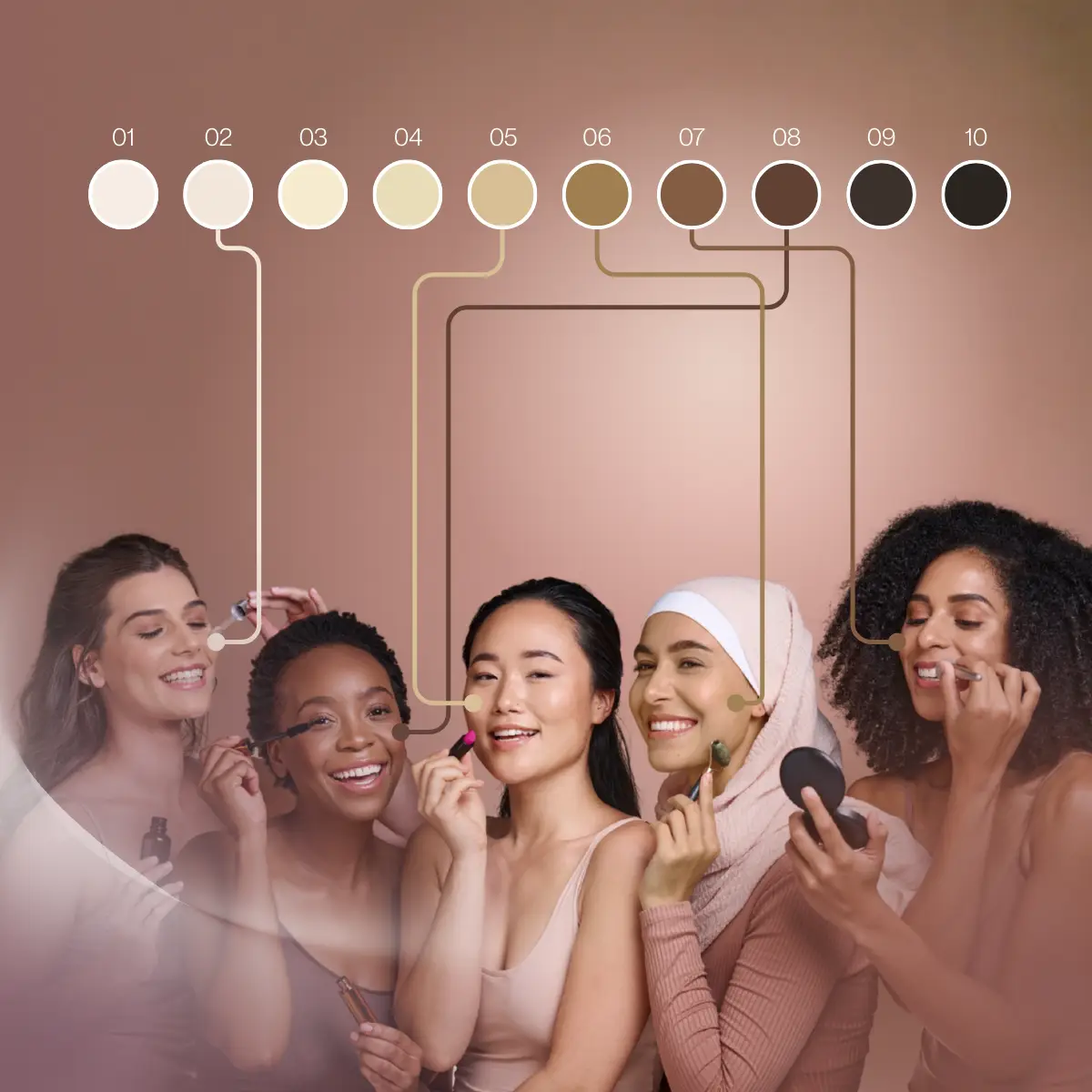
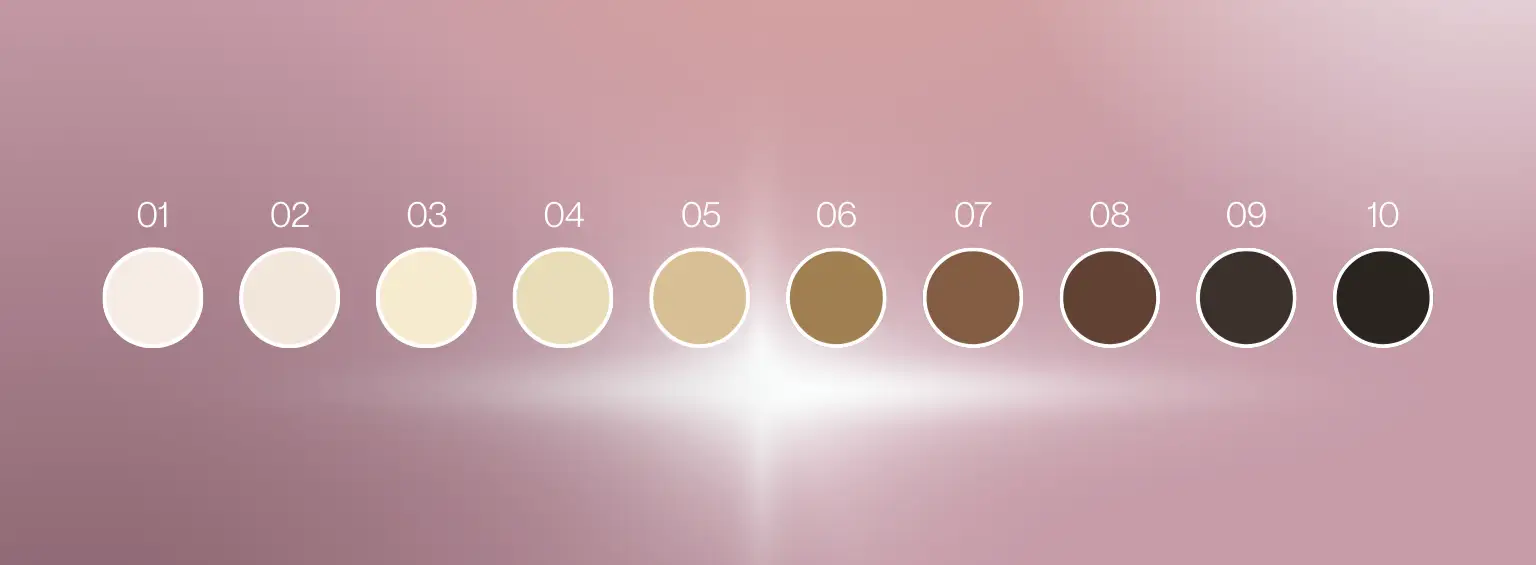
Using the Monk Skin Tone (MST) Scale, a 10-tone system developed by Ellis Monk and Google to represent the full spectrum of human skin tones, we mapped every foundation shade across these brands to evaluate their foundation range inclusivity.
The results were eye-opening.
Despite wide shade ranges and strong reputations for inclusivity, the same structural issues appeared again and again:
- Large portions of the shade ranges clustered around mid-tones
- Very light and very deep skin tones were consistently underrepresented
- Some brands offered dozens of shades, yet covered only a fraction of the MST scale
In other words, more shades did not automatically mean more inclusivity.
This isn’t about pointing fingers. It’s about highlighting a pattern that exists across the industry. Even among brands that are trying to do the right thing.
And it raises an important question for every beauty brand today:
How inclusive is your foundation range – really?
Why this matters more than ever
Inclusivity is no longer a values-only discussion. It’s a commercial reality.
Consumers today expect brands to reflect real diversity – not just in campaigns, but in products they can actually buy and use. When customers can’t find a foundation that matches their skin tone, they don’t just feel overlooked – they leave. This shade inclusivity problem shows up immediately in purchasing behavior.
Research shows that:
- Customers who fail to find a suitable shade are significantly more likely to switch brands
- Poor shade availability remains one of the top reasons for foundation returns
- Brands perceived as genuinely inclusive build stronger loyalty and higher lifetime value

In a market where switching brands is easy and alternatives are endless, inclusive makeup brands with product-level inclusivity have a clear competitive advantage.
Yet many brands still struggle to assess where they stand, and where they’re falling short.
That’s where a more objective, data-driven approach becomes essential.
The state of inclusivity today: Progress, yes – but not enough
Brands have expanded their ranges dramatically over the past decade, but inclusivity in cosmetics still has a scale problem.
When we analyzed the foundations of seven major global brands using the Monk Skin Tone (MST) Scale, a clearer picture emerged, and it wasn’t encouraging.
Here are the most striking findings.
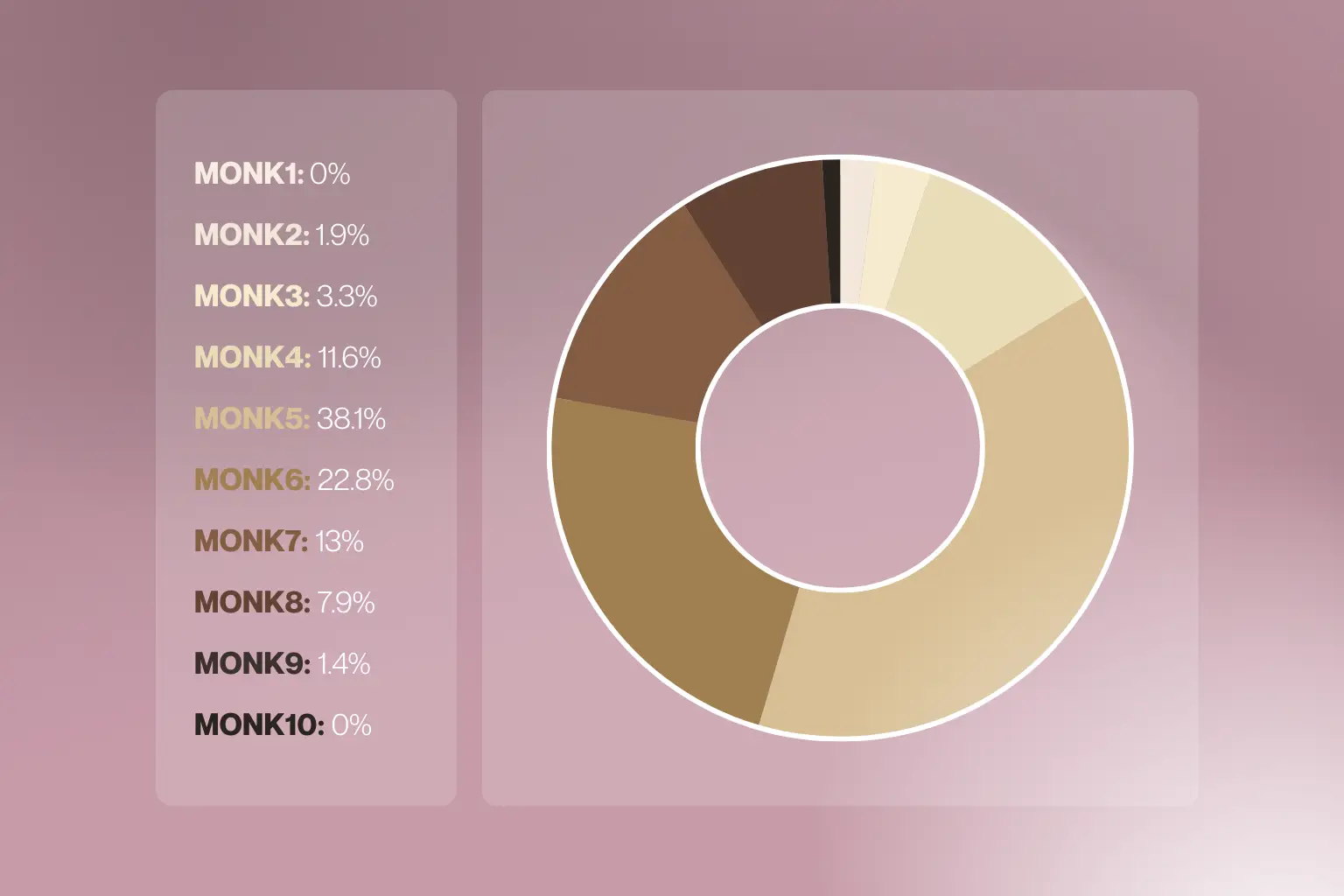
1. Overrepresentation of mid-tones
Across the brands analyzed, over 60% of shades were clustered around MST 5 and MST 6. Meanwhile, very light (MST1) and very deep (MST10) tones were either underrepresented or completely missing.
2. Redundancy instead of representation
Some brands offered 20+ shades, but covered only 4 out of the 10 MST tones. This means the range looks large – but overlaps heavily, which is not the point.
3. Even “inclusive” makeup brands have gaps
Two of the analyzed brands are widely celebrated for inclusivity, yet both had notable coverage gaps on the MST scale.
The takeaway:
A wide shade range is not the same as a diverse shade range. Without a structured, quantitative approach, brands can unintentionally exclude whole segments of consumers.
Why brands should care: Inclusivity = revenue, loyalty, and competitive advantage
Foundation is the highest-risk product in beauty. If inclusivity doesn’t show up in your foundation lineup, it doesn’t exist – at least not for the customers who are excluded. And those customers don’t wait for brands to “do better.” They buy elsewhere.
1. Consumers reward brands that reflect them
Studies show that 50% of consumers prefer brands that prioritize cosmetic diversity, while 31% of U.S. shoppers actively avoid brands that lack diversity commitments. If consumers can’t find themselves in your range, they will find a brand that sees them.
2. Competitive gaps are more visible than ever
Beauty shoppers compare brands instantly: online, in social feeds, or through virtual try-on. If your competitor offers a better match, especially for underserved tones, you lose the sale.
3. Poor inclusivity leads to higher returns
Mismatched foundations are one of the most frequently returned beauty products. Better representation reduces costly returns and increases customer satisfaction.
4. Inclusivity builds brand credibility
Consumers are quick to spot the gap between inclusive messaging and inclusive products. When a brand’s shade range aligns with its claims, credibility follows. When it doesn’t, trust erodes – often publicly. Product-level inclusivity turns brand promises into something consumers can verify for themselves.
For a broader view of where inclusivity in beauty stands today – from consumer expectations to industry-wide gaps – explore our State of Inclusivity in Beauty report.
Where inclusivity breaks down: The hidden pitfalls in shade development
Even well-intentioned brands face obstacles:
- Relying on outdated shade development methodologies
Legacy shade scales and subjective visual assessment systematically over-prioritize mid-range skin tones. - Bias in datasets and testing panels
When development and testing lack diversity, products do too. - Mistaking shade volume for true coverage
Adding “more shades” does not equal serving “more tones.” - Lack of objective measurement tools
Without a data-driven framework, brands cannot accurately assess whether their lineup is truly representative.
This is exactly where the Monk Skin Tone Scale brings clarity, and where inclusive makeup development becomes truly systematic.
How to create truly inclusive products: A practical framework
Inclusivity needs to be intentional, systematic, and data-backed. Here’s how leading brands can get it right:
1. Start with a diverse, science-based scale (like MST)
The MST scale’s 10 tones represent a broader global population than most traditional shade scales. Using MST as a foundation removes guesswork and ensures coverage across all tones.
2. Audit your existing range with real data
Identify:
- Overrepresented tones
- Gaps or missing tonal groups
- Redundant shades
This audit is the baseline for improvement.
3. Test with diverse panels
Consumer testing should be done across the full skin tone spectrum, consistently including very light and very deep skin tones, who are most often underrepresented.
4. Use technology to guide decisions
Tools like AI-powered shade matching or shade distribution mapping help brands identify gaps, validate shade ranges, and minimize costly trial-and-error development.
Introducing the Foundation Inclusivity Analysis: A simple, objective way to measure inclusivity
Most brands want to be inclusive. Very few know how inclusive they truly are.
That’s why we developed the Foundation Inclusivity Analysis, a data-driven, MST-based framework that evaluates inclusivity across three key areas:
- Range coverage: Which MST tones are represented? Which are missing?
- Distribution balance: Are shades evenly distributed or clustered around mid-tones?
- Tone redundancy vs. tone representation: Are there unnecessary duplicates where unique tones should exist?
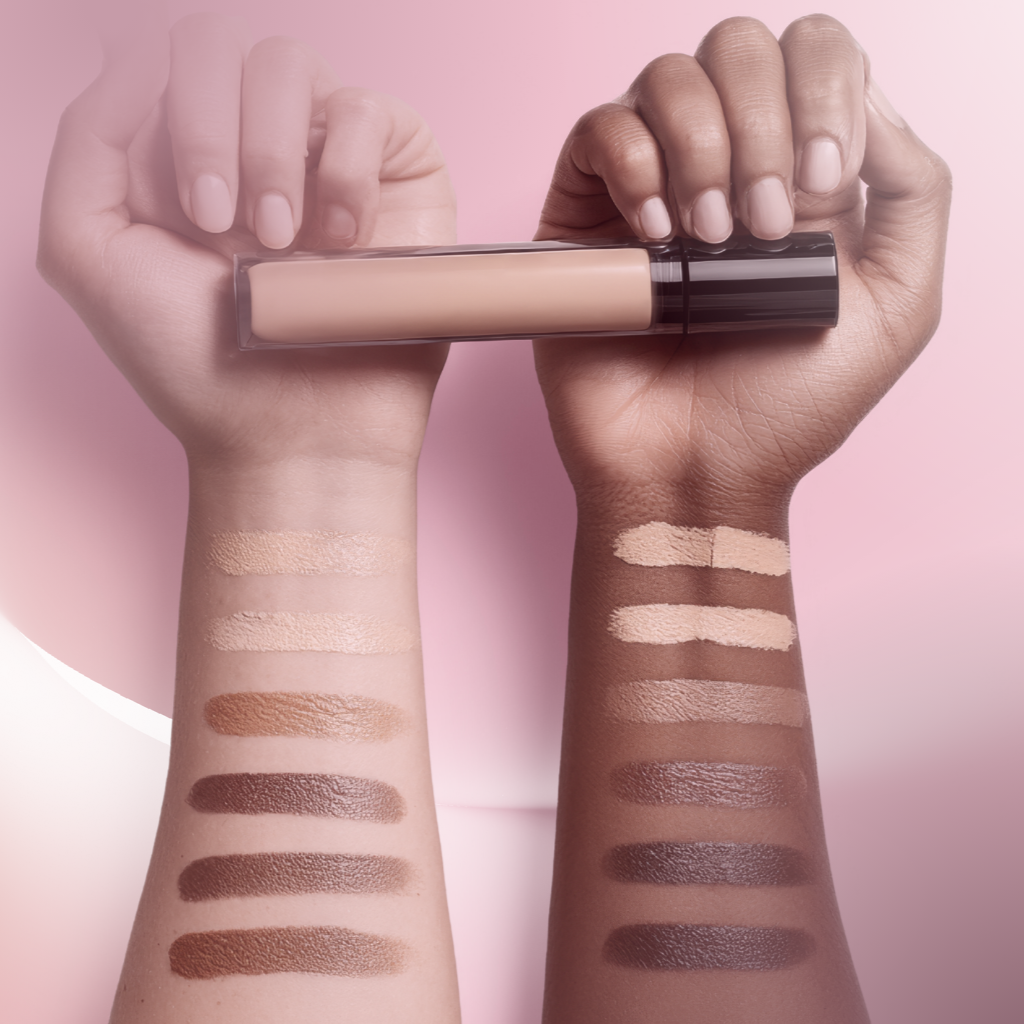
This analysis gives brands:
- A clear inclusivity overview
- A visual breakdown of your current products’ shade range
- Specific recommendations for improvement
It’s a simple, science-backed tool that helps brands uncover gaps, make smarter development decisions, and build product lines that reflect everyone – not just the majority.
The future of beauty is inclusive – and data will lead the way
Consumers want to see themselves. Brands want to serve them better. The missing link has always been clarity.
By pairing modern shade scales (like MST) with structured evaluations (like the Foundation Inclusivity Analysis), inclusive makeup brands can move beyond performative inclusivity and start delivering products that match real people, real skin tones, and real global diversity.
If you’re ready to understand how your product range scores and where the biggest opportunities lie, don’t hesitate to reach out and get your complimentary Foundation Inclusivity Analysis.
Your customers are diverse. Your products should be too.
FAQs
1. What makes a makeup brand truly inclusive?
A truly inclusive makeup brand goes beyond offering many shades – it ensures meaningful, data-backed coverage across the full spectrum of real skin tones. This means using objective tools like the Monk Skin Tone (MST) Scale to identify gaps, avoid clustering around mid-tones, and ensure both very light and very deep tones are represented.
It also requires developing and validating shades through diverse testing panels so products perform well for groups often underserved by the industry. Ultimately, a brand is inclusive when its foundation range reflects real people, not assumptions, and when every customer can reliably find a shade that fits.
2. Why does foundation range inclusivity matter?
Because foundation is the category where gaps become immediately obvious. When ranges cluster around mid-tones or skip very light and very deep tones, customers feel excluded, returns rise, and competitors with broader coverage win the sale.
In short, foundation range inclusivity directly impacts revenue, loyalty, and brand credibility.
3. How can brands fix the shade inclusivity problem?
Start by mapping the current range against an objective scale like MST to see which tones are overrepresented or missing. Then rebuild strategically: add shades where real gaps exist, reduce redundancy, and validate performance through testing across diverse skin tones. This shifts development from assumption to evidence.
4. What is a Foundation Inclusivity Analysis?
It’s a structured, MST-based evaluation that we conduct at Arbelle free of charge, which reveals how well a foundation range covers real skin tones. It highlights distribution gaps, clustering, and redundancies, offering clear recommendations to help brands improve representation and create a more inclusive, commercially stronger lineup.
Get a free analysis
Discover how your product range scores and where your biggest opportunities lie with a complimentary Foundation Inclusivity Analysis.

Related Posts