Author: Admin

  • 4 Steps: How To Apply Highlighter On Face

    4 Steps: How To Apply Highlighter On Face

    Published on
    by Arjun Singh

    Share:

    In this ever-evolving world of beauty, if there is one staple in our vanity, it has to be a ‘Highlighter’. The Ultimate Guide on How To Apply Highlighter on Face talks about its remarkable ability to transform your look and illuminate your face and why it has become a cult favourite. From enhancing your facial features to providing a sculpted appearance and giving you a dewy and radiant look, a highlighter is indeed a magical makeup product. Applying it might be fun, but the process could be tricky, especially if you want to achieve that perfect make-up look. If you are searching for information on how to get it right, we’ve come up with a complete guide on how to apply highlighter on face correctly.

    What is a highlighter and what are the uses of a highlighter?

    Highlighter is hailed as a transformational makeup product because of its potential to enhance your look with just a single swipe. It uses a light-reflecting finish to enhance your facial features & sculpt your face. Understanding how to apply highlighter on face is key, as it imitates where the natural light hits the face and draws attention to the high points, offering a radiant, dewy and brighter look. In addition to this, a highlighter is used to contour the facial features, making them appear slimmer & more beautiful. 

    Different Types of Highlighters

    Highlighters come in various forms like liquid, powder, and cream, each offering a unique way to illuminate your natural beauty. At Forest Essentials, our Illuminating Highlighter Balms are specially crafted for a soft, natural glow. Ideal for dry or normal skin, these balms can be worn alone or blended with foundation to create a luminous, seamless finish. Knowing how to apply highlighter on face with these balms ensures you get the perfect radiant effect while benefiting from nourishing ingredients like Coconut OilAloe Vera, and pure Beeswax, which deeply hydrate, firm, and enhance your skin’s natural radiance. If you’re wondering how to apply highlighter on face for different occasions, these balms work beautifully to give a sheer, luminous finish that elevates both your look and confidence. Available in three exquisite shades, Mukta, Sona, and Kansa, each provides elegance with a radiant glow.

    For those with oily or combination skin, Forest Essentials’ powder highlighters offer a lightweight, shimmery-matte finish that brightens the complexion without adding excess shine. Their delicate texture ensures they glide effortlessly over the skin, making them ideal for mature skin as well, since they won’t settle into fine lines. Long-lasting and easy to apply, these highlighters provide a radiant, luminous glow that complements every skin tone and type, making them perfect if you are learning how to apply highlighter on face.

    How To Apply Highlighter On Face

    Step 1

    Prep your base by following your basic skincare routine. Cleanse your skin with a refreshing, SLS-free facial cleanser like Forest Essentials’ Honey, Lemon & Rosewater that cleanses the skin without stripping the natural oils. Then spritz the Forest Essentials’ Facial Tonic Mist Rosewater to intensely hydrate the skin.

    And finally, moisturise your skin using the Sanjeevani Beauty Elixir that instantly penetrates and plumps the skin while acting as a primer and providing a smooth and velvety base. 

    Step 2

    How To Apply Highlighter On Face

    Build your base by applying a foundation that’s apt for your skin type. When learning how to apply highlighter on face, we suggest using Forest Essentials’ Som Rasa Velvet Skin Tint with a weightless, breathable and buildable formulation. Follow up with the Som Rasa Velvet Concealer that effortlessly masks and corrects your imperfections.

    Step 3

    Pick a suitable highlighter from Forest Essentials’ Highlighting Glow range, a velvet-textured balm that provides a sheer, luminous finish. It is enriched with skin-benefitting ingredients and micro-fine particles of precious stones and metals, offering both nourishment and illumination.

    Dab it on those five points of your face where natural light reflects: First, right along the top of your cheekbones with the help of a brush to highlight them. Next, at the centre of your upper lip, on your cupid’s bow, to enhance the shape of your lips. After this, down the bridge of your nose to give you a slimmer & sculpted nose. Knowing how to apply highlighter on face correctly also means adding it at the inner corners of your eyes, to make them appear bigger and more open & to give the impression of arched brows. Then, gently dab under the arch of your eyebrows to make it look sharper.

    The key to how to apply highlighter on face is to gently blend with a smaller amount and then increase the product intensity, if required. Follow this method in front of a mirror to ensure that the makeup looks natural and to see whether further blending is required. Also, check where the natural light hits to recognise the exact points where the highlighter is to be applied.

    Step 4

    How To Apply Highlighter On Face

    While doing makeup, the steps can be tricky, but knowing your products and techniques like how to apply highlighter on face can make a huge difference in your beauty and confidence. So, the next time you are doing your makeup, remember that you are not just enhancing your beauty but also your confidence.

    References

    https://en.wikipedia.org/wiki/Highlighter_(cosmetics)

    Where do you apply highlighter on your face?

    The highlighter should be applied on those five points of your face where the light naturally hits. On the top of your cheekbones, on the bridge of your nose, at the inner corner of your eyes, at the centre of your upper lip, and under the arch of your brows.

    Do you put highlighter over or under foundation?

    Ideally highlighter should be applied after foundation for a sculpted and more prominent look, but it can be applied before foundation to create the illusion of a glow-from-within kind of look. You could also mix your highlighter with foundation for an effortless & all-over glow.

    What to apply before a highlighter?

    You must follow your basic skincare routine before applying highlighter: cleanser, toner & moisturiser. You can use a highlighter before, after, or with your foundation, as per your preference.

    Is highlighter necessary?

    Even though applying a highlighter is not a necessary step while doing makeup, it plays a crucial part in enhancing your facial features.

    Is highlighter safe on the skin?

    The quality of the ingredients present in a highlighter determines whether it’s safe or not. Use highlighters that are made with natural ingredients and the ones that do not contain any chemicals, like Forest Essentials’ Illuminating Highlighter Balms that are formulated with skin-benefitting ingredients like Organic Beeswax, Coconut oil & Aloe Vera 200X.

    Written By:

    avtar

    Forest Essentials
    Luxurious Ayurveda

    India’s leading beauty brand with products offering a sensorial journey with the purest natural ingredients and traditional Ayurvedic formulations, bringing timeless beauty rituals to the forefront of your self-care routine.

    Reviewed By:

    Arjun Singh

    Arjun Singh
    Senior Ayurveda Expert

  • 8 Shea Butter For Skin & Hair Benefits

    8 Shea Butter For Skin & Hair Benefits

    Published on
    by Arjun Singh

    Share:

    In the gleaming world of modern skincare, where shelves overflow with bottles promising miracles and labels speak in complex chemistry, many of us are turning back to something our grandmothers always knew: Nature’s best.

    Across India from the herbal wisdom of Ayurveda and the timeless traditions of our mothers and grandmothers—oils, roots, seeds, and butters have long been part of our daily beauty rituals. Whether it was applying coconut oil to the hair under the afternoon sun or using turmeric paste before a wedding ceremony, beauty in India has always been deeply rooted in the earth.

    And among nature’s most luxurious gifts, one quietly powerful ingredient has won hearts: Shea Butter For Skin and hair.

    What is shea butter?

    It’s a creamy, nutrient-rich fat extracted from the nuts of the shea tree (Vitellaria paradoxa). Traditionally handcrafted, it’s not just a butter it’s a symbol of nourishment, healing, and self-care passed down through generations.

    Packed with vitamins A, E, and F, along with essential fatty acids, Shea Butter For Skin acts like a healing balm – deeply moisturizing, protective, and restorative.

    Much like our beloved ghee, shea butter is a rich, soothing substance that speaks to tradition, purity, and wholesomeness.

    Let’s explore how this age-old ingredient brings balance, beauty, and rejuvenation to your skin and hair.

    8 Powerful Benefits of Shea Butter for Skin & Hair

    1. Deep Nourishment for Dry Skin

    The first thing about Shea Butter for Skin is its ability to deeply nourish—without feeling greasy. Unlike many moisturizers that sit on the surface, it soaks into your skin, feeding it from within.

    In dry Indian climates—especially during winter in the north or in the hot winds of Rajasthan—skin often becomes flaky, tight, or irritated. Shea Butter For Skin acts like a warm, indulgent embrace for your skin, locking in moisture and soothing dryness almost instantly.”

    Try our Radiance renewal Body Cream enriched with shea butter which deeply nourishes renews and repairs the skin.

    2. Natural Anti-Aging Miracle

    “Well aging is a natural journey but caring for your skin can be a graceful expression of self-love and timeless beauty.”

    Rich in antioxidants like vitamins A and E, Shea Butter for Skin helps fight free radical damage, one of the biggest causes of premature aging. It maintains elasticity, reduces fine lines, and supports firm, youthful skin naturally.

    It’s like a timeless beauty secret passed from mother to daughter, from the earth to your skin.

    You can experience this richness with our Soundarya Radiance Day Cream, infused with shea butter, pure 24-karat gold, and saffron specially formulated to reduce signs of aging and to enhance skin’s natural glow.

    3. Calms Sensitive or Irritated Skin

    Ayurveda teaches us to balance the doshas—Vata, Pitta, and Kapha—for optimal skin health. For those with pitta dominance (prone to inflammation, redness, and sensitivity), shea butter is a godsend.

    Its natural anti-inflammatory properties make it perfect for calming conditions like eczema, rosacea, or seasonal flare-ups. Gentle enough for babies and allergy-prone individuals, it supports the skin’s natural barrier.

    Use tip: Dab a bit on irritated areas before bed, and let nature do its healing overnight.

    This is one of the health benefits of shea butter for skin that truly makes it an everyday essential.

    4. Glowing and Gleaming Skin

    8 Powerful Benefits of Shea Butter for Skin & Hair

    Looking for that radiant, lit-from-within glow without extra makeup? Shea Butter For Skin brings your complexion back to its natural brilliance.

    By stimulating collagen and encouraging skin renewal, it enhances tone and texture. It’s almost like a natural highlighter, no shimmer, just nourishment.

    In a culture that loves haldi masks and sandalwood pastes for radiance, Shea Butter for Skin blends seamlessly into this tradition of earth-rooted beauty rituals.

    5. Fades Dark Spots, Marks & Scars

    Have old acne scars or stubborn pigmentation? With regular use, shea butter helps fade dark spots by promoting healthy cell turnover and collagen synthesis.

    It doesn’t bleach or harm like chemical treatments. Instead, it gently supports the skin’s healing.

    Use tip: Mix a bit of shea butter with rosehip or turmeric oil for a spot treatment that delivers powerful results.

    Among the many benefits of shea butter on face, this one is very effective for those seeking clear, even-toned skin.

    6. Deep Conditioning of hair, the Natural Way

    8 Powerful Benefits of Shea Butter for Skin & Hair

    Sometimes, the most effective treatment comes from simple, time-honored ingredients. Shea butter offers a rich, intensive conditioning experience that restores hair from root to tip.

    Whether used alone or blended with Ayurvedic herbs like Japapatti or Bhringraj, it replenishes moisture, smooths frizz, and strengthens each strand without weighing it down.

    A weekly ritual with shea butter turns hair care into a moment of calm, care, and quiet luxury.

    7. Restores Shine & Health to Hair

    Indian hair rituals are rich with tradition—coconut oil massage, hibiscus pastes, and fenugreek masks. Shea butter benefits for hair are widely recognized and easily adapted into these routines.

    It deeply nourishes the hair and restores shine. Whether your hair is curly or straight, shea butter helps with softness, manageability, and breakage prevention.

    Use tip: Warm a small amount in your palms and apply on damp hair ends to tame frizz and seal in moisture then wash.

    8. Soothing Support for Sun-Exposed Skin

    While not a substitute for sunscreen, shea butter contains natural compounds like cinnamic acid that offer mild sun-protective qualities (SPF 3–6). Its real strength, however, lies in what it does after sun exposure.

    Rich in anti-inflammatory properties, shea butter helps soothe sunburned or irritated skin, while its deep moisturizing action supports skin repair and hydration. It can be used alongside your regular sunscreen for added nourishment or as a calming, after-sun treatment.

    Some ingredients feel like they’ve always belonged, and shea butter is one of them blending effortlessly into moments of quiet self-care. At Forest Essentials, we honor this connection by combining shea butter for skin with powerful herbs and botanicals, creating beauty that is rooted in tradition and elevated by science.

    References

    https://en.wikipedia.org/wiki/Shea_butter

    https://www.ijsdr.org/papers/IJSDR2405082.pdf

    https://pmc.ncbi.nlm.nih.gov/articles/PMC7830171

    https://pubmed.ncbi.nlm.nih.gov/39528438

    https://www.jacionline.org/article/S0091-6749(08)03527-6/fulltext

    Is shea butter good for Indian skin?

    Yes. Shea butter is deeply hydrating, safe for skin, and works well in both dry and humid Indian climates.

    How does shea butter compare to coconut oil?

    Coconut oil is lighter in texture and absorb quickly than shea butter, while shea butter provides deeper hydration and has stronger anti-inflammatory properties—making it ideal for dry, flaky, or reactive skin.

    Can shea butter help remove dark spots?

    Yes. With regular use, shea butter supports healthy cell turnover and collagen production, which can help fade pigmentation, scars, and dark spots naturally over time.

    Is shea butter safe for oily or acne-prone skin?

    Yes. Shea butter is non-comedogenic and has soothing, anti-inflammatory properties that can help calm acne and reduce irritation.

    What is the SPF of shea butter?

    Shea butter has a natural SPF of approximately 3–6. While it’s not a substitute for sunscreen, it offers a gentle, nourishing layer of light sun protection for everyday use.

    Written By:

    avtar

    Forest Essentials
    Luxurious Ayurveda

    India’s leading beauty brand with products offering a sensorial journey with the purest natural ingredients and traditional Ayurvedic formulations, bringing timeless beauty rituals to the forefront of your self-care routine.

    Reviewed By:

    Arjun Singh

    Arjun Singh
    Senior Ayurveda Expert

  • Modern Skincare: Ayurvedic Herbs Harmony

    Modern Skincare: Ayurvedic Herbs Harmony

    Published on
    by Dr. Taruna Yadav

    Share:

    In Ayurveda, balance is not created by force—it is curated by rhythm, memory, and subtle intelligence. Every herb, root, and flower holds a vibration, a rasa, a healing touch. And in modern skincare science, we see a different kind of brilliance—measurable actives, peptide pathways, clinical precision.

    Welcome to the future of personalised skincare—where Ayurvedic herb categories like Varnya, Shothahara, Twachya, Vayasthapana, and Sandhaniya are no longer ancient words, but intelligent allies working in tandem with modern actives like niacinamide, hyaluronic acid, ceramides, and peptides.

    Let’s unravel this precise rhythm where ancient botanicals and intelligent actives meet to give a synergistic effect to the formulation.

    • Twachya + Ceramides & Hyaluronic Acid

    Skin doesn’t just need moisture—it needs moisture memory.
    Twachya herbs like Yashtimadhu and Aloe Vera awaken the skin’s innate ability to retain hydration. When combined with ceramides and hyaluronic acid, they reinforce the lipid matrix and go beyond hydration—they help support the skin barrier’s self-repair cycle.

    • Varnya + Niacinamide & Vitamin C

    Radiance is not a surface glow—it’s an expression of harmony within the Rasa Dhatu.
    Varnya herbs such as Manjistha and Padmaka refine, brighten, and clarify. Layered with niacinamide and stabilized vitamin C, they form a pigment-balancing powerhouse that illuminates skin tone and texture.

    • Shothahara + Panthenol + Niacinamide

    True calm runs deeper than surface relief.
    Shothahara herbs like Turmeric and Chandan soothe inflammation at its source. Paired with panthenol and niacinamide, they offer layered anti-inflammatory care—quieting redness, heat, and reactivity with precision.

    • Vayasthapana + Peptides & Bakuchiol

    In Ayurveda, aging is honoured with intelligent regeneration.
    Vayasthapana herbs such as Ashwagandha and Brahmi stimulate ojas and collagen pathways. Combined with peptides and plant-derived bakuchiol, they promote firmness, renewal, and cellular vitality—without irritation.

    • Sandhaniya + Ceramide III +Phyto squalene

    Repair is a language of cohesion.
    Sandhaniya herbs like Gotu Kola and Bala restore tissue integrity and micro-repair function. When fused with ceramide III and Phyto squalene, they reinforce the skin’s barrier intelligence—creating strength, softness, and structure.

    What makes this fusion powerful is not just what goes in—but why, how, and for whom.

    Your skin may need the calming wisdom of Punarnava, but also the cooling power of peptides. You might benefit from the rasayana strength of Amalaki, but also the firming strength of Bakuchiol. This isn’t guesswork—it’s Dosha-driven design, merged with Data.

    Each personalised cream is created like a tailored ayurvedic prescription—one ingrained in the ancient texts, and the other in peer-reviewed journals.

    Written By:

    Forest Essentials
    Luxurious Ayurveda

    India’s leading beauty brand with products offering a sensorial journey with the purest natural ingredients and traditional Ayurvedic formulations, bringing timeless beauty rituals to the forefront of your self-care routine.

    Reviewed By:

    Dr. Taruna Yadav

    Dr. Taruna Yadav
    Senior Ayurveda Doctor

  • Personalised Skincare & Ayurvedic Herbs

    Personalised Skincare & Ayurvedic Herbs

    Published on
    by Dr. Taruna Yadav

    Share:

    In Ayurveda, the skin is not just seen as a surface to be soothed, but as a mirror of inner Dhatus, a messenger of Balance or Vikriti. It speaks in silence—through dryness, through radiance, through inflammation, through time. And when it speaks, it deserves more than a product. It deserves a response woven from understanding.

    This is the philosophy behind truly personalised Ayurvedic creams that are not just generic solutions. They are living formulations, crafted with Manasa (intention) and guided by the time-honoured science of herbal intelligence amalgamated with advanced actives.

    Each ingredient isn’t just chosen for effect—but for its Guna (quality), Prabhava (unique potency), and its alignment with your Dosha, your season, and your skin’s story.

    Let’s explore the five foundational herb classes that bring life and soul to your personal formula—and why they make it utterly unique.

    • Twachya – The Skin Nourishing herbs

    Tvachya herbs are the baseline of skincare and beauty in Ayurevda as they nourish the skin from the inside out, rebuilding softness, hydration, and strength. Herbs like Licorice, Aloe Vera, Neem, and Shatavari—each selected based on your skin’s dryness, sensitivity, or oil imbalance.

    In a personalised cream: Twachya herbs become the nurturing layer, often forming the base of your formula. They’re what make your skin feel fed, not just coated.

    • Varnya – The Radiance Enhancing herbs

    This is where your glow is born. Varnya herbs—like Manjistha, Lodhra, Sandalwood, and Vetiver—are classical Ayurvedic botanicals known to improve healthy glow, clarity, and skin tone.

    In a personalised cream: If your concerns include dullness, tanning, or pigmentation, Varnya herbs are added as botanical boosters that work synergistically with natural humectants. They don’t lighten your skin—they reveal its natural luminosity.

    • Shothahara – The Anti-inflammatory herbs

    For anyone whose skin flares up—acne, redness, sensitivity—Shothahara herbs are your silent healers. With Turmeric, Punarnava, and Chandan, this category is your internal fire or heat soothers.

    In a personalised cream: These herbs are microdosed for potency, calming inflammation without stripping the skin. Ideal for Pitta-aggravated skin or those exposed to pollution and heat.

    • Vayasthapana – The Age Gracefully Actives

    Not just anti-aging—pro-vitality. Vayasthapana herbs like Ashwagandha, Amalaki, Brahmi, and Shankh Pushpi are cellular healers. They defend your collagen, slow cellular breakdown, and improve elasticity from the Dhatu level.

    In a personalised cream: Often part of your night-time formulation, these are blended into lipid-based bases or adaptogenic serums, working while you rest—restoring firmness, balance, and resilience.

    • Tvagrasayana – The Skin Longevity herbs

    This is the secret to long-term skin health. Tvagrasayana herbs don’t just treat concerns—they build the future of your skin. Haritaki, Guduchi, and Amalaki are potent detoxifying and renewing herbs, ideal for urban lifestyles.

    In a personalised cream: These herbs are combined with modern peptides or ceramides to create formulas that strengthen your skin barrier, tone, and firm the skin.

    In a world where most creams are made for everyone, Ayurvedic personalised creams are made for only one: you. By analysing your dosha, skin type, climate, age, and even emotional state, our formulator is able to blend these five categories in exact proportion.

    Your skin may need more Twachya in winter, or extra Shothahara after a breakout. Maybe Varnya takes center stage after sun exposure. And Vayasthapana? That becomes a lifelong companion.

    Hence each personalised cream becomes a living formula—deeply Ayurvedic, lovingly modern, and profoundly personal.

    Written By:

    Forest Essentials
    Luxurious Ayurveda

    India’s leading beauty brand with products offering a sensorial journey with the purest natural ingredients and traditional Ayurvedic formulations, bringing timeless beauty rituals to the forefront of your self-care routine.

    Reviewed By:

    Dr. Taruna Yadav

    Dr. Taruna Yadav
    Senior Ayurveda Doctor

  • The Art of Customised Skincare| Forest Essentials

    The Art of Customised Skincare| Forest Essentials

    Published on
    by Dr. Taruna Yadav

    Share:

    In a world abundant with fleeting trends and universal formulas, imagine a skincare experience that goes beyond the ordinary — one that is crafted exclusively for you.

    At Forest Essentials, we invite you to rediscover the true essence of beauty — where the ancient science of Ayurveda embraces the precision of modern innovation. This is not skincare as you know it. This is a journey of self-discovery. A ritual that begins within.

    No two people are alike — and neither are their skin stories. Your skin reflects your inner world — your emotions, your lifestyle, your diet, even the rhythm of your sleep. At Forest Essentials, we believe in listening to this story, not masking it. Which is why our approach begins, not at the surface, but at the source — with you.

    Your journey commences with a deeply intuitive Ayurvedic Consultation, where our experts study your Prakriti (inherent nature) and Vikriti (current imbalances), uncovering the subtle nuances of your skin’s narrative. Through this process, your skin is not categorised — it is understood.

    In a world constantly in flux — marked by stress, changing seasons, and digital fatigue — your skin, too, is in constant conversation with its surroundings. While conventional care seeks to correct, Ayurveda seeks to harmonise. It understands that true beauty is not merely seen — it is felt. It radiates when the body, mind, and spirit are in balance.

    Personalised skincare, therefore, is not indulgence. It is intelligence — an act of profound self-care that honours your unique rhythm. Following your consultation, you receive a detailed, personalised dossier — revealing your Ayurvedic constitution, lifestyle and dietary recommendations, and skincare rituals curated for your dosha.

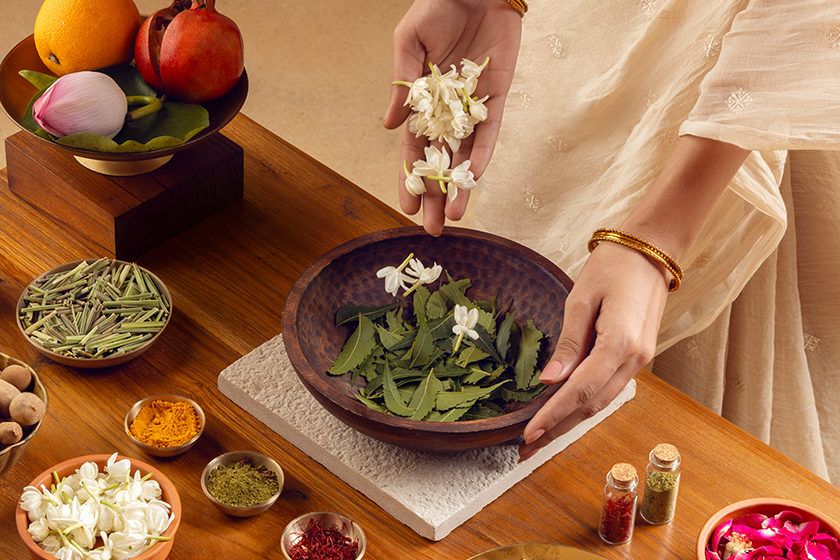
    Once your story is fully known, the formulation begins — an exquisite dialogue between Nature and Science. Each product is meticulously crafted using time-honoured Kalpanas (Ayurvedic methods of preparation), where every ingredient is chosen with intention: the root, the flower, the bark, or the resin — each holding a secret symphony of healing.

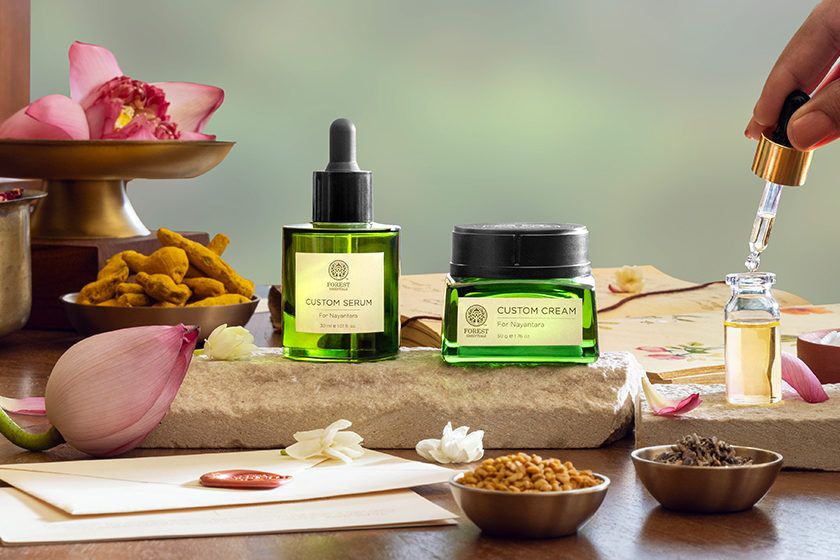
    Whether it takes the form of a serum, an elixir, or a cream, your creation is more than a formulation — it is a living blend of purity and purpose, made freshly for you.

    Your experience culminates in a personal ritual guide, thoughtfully designed to bring your inner and outer worlds into alignment. It includes mindful skincare steps, herbal teas and food pairings to nourish your glow from within, and restorative practices that awaken your senses and calm your spirit.

    Because this is not simply skincare. It is a sacred daily ritual — of stillness, of connection, of return.

    Every skin has a story. Let yours be heard, honoured, and healed.

    With Forest Essentials Customised Skincare, you are not merely choosing a product — you are embracing a path. A timeless journey where every drop carries the wisdom of centuries, and the grace of now.

    Come home to your skin. Let it glow with balance, beauty, and bliss.

    Written By:

    Forest Essentials
    Luxurious Ayurveda

    India’s leading beauty brand with products offering a sensorial journey with the purest natural ingredients and traditional Ayurvedic formulations, bringing timeless beauty rituals to the forefront of your self-care routine.

    Reviewed By:

    Dr. Taruna Yadav

    Dr. Taruna Yadav
    Senior Ayurveda Doctor

  • Almond Oil for Skin Benefits

    Almond Oil for Skin Benefits

    Published on
    by Arjun Singh

    Share:

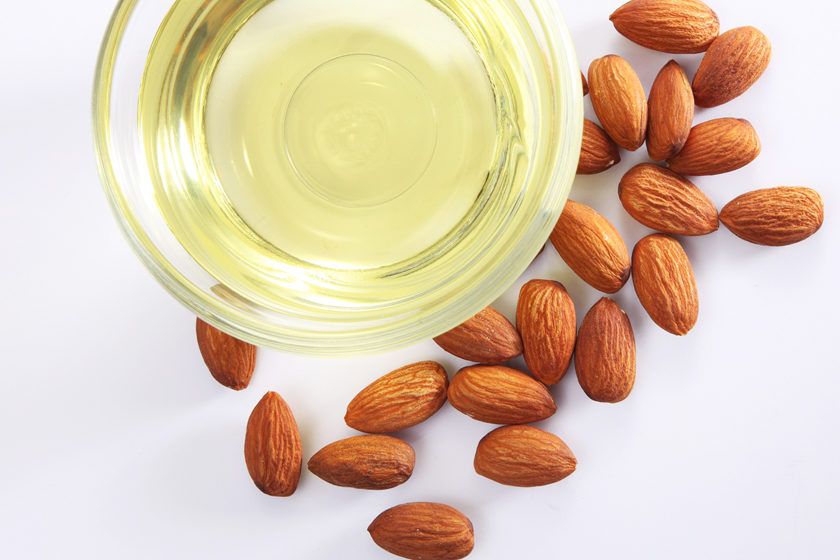
    Traders once crossed dry winds with a small flask of sweet almond oil calling it “food for the face” to calm tight, wind-beaten skin. When those drops reached Indian courtyards, they slipped into the pre-wedding ubtan bowl—just enough to add glide and a soft, post-wash glow. From caravan to courtyard, the rule stayed the same: nourish first, polish next. That’s why Almond Oil for skin still shows up when the air feels harsh or before celebrations— it softens dry patches, lends a quiet sheen, and sets the base for an even, radiant look.
    Now, let’s look at the benefits of Almond Oil for skin in Ayurveda, the science behind it, and why cold-pressed, first-press oils are best.

    Benefits of almond oil for the skin — modern science

    • Softens and locks in moisture: Sweet Almond Oil for skin is rich in skin-friendly fats (oleic & linoleic acids) and natural vitamin E. These help “fill in” dry spots and slow water loss, so rough areas feel smoother.
    • Supports the skin barrier: Research in real people shows sweet Almond Oil for skin helps protect stressed, fragile skin. So, if your skin barrier feels damaged (after over-cleansing, exfoliation, or harsh weather), applying a few drops on damp skin can help comfort it and slow moisture loss.
    • Comforts very dry, itchy skin: A clinical study in people with severe dryness found that applying sweet almond oil improved comfort and quality of life. For oily skin, it can still help when used right—use it as a gentle rinse-off cleansing oil (oil dissolves oil) or tap just 1 drop on damp skin to prevent over-drying and rebound greasiness.
    • Anti-aging support: The vitamin E and essential fatty acids in Almond Oil for skin help fight everyday oxidative stress, seal in moisture to soften fine lines, and keep the barrier flexible—so skin looks smoother, springier, and more even over time. Use 1–2 drops on damp skin at night, and pair with daily sunscreen.
    • Safe for most skin (low irritation): The Cosmetic Ingredient Review panel rates sweet Almond Oil for skin safe for topical use, with low irritation seen in patch tests. To keep it skin-friendly: choose cold-pressed, fragrance-free oil.

    In Ayurveda, Almond Oil for skin is praised as snigdha (richly emollient), tvacya (skin-nourishing), varnya (supports glow/even tone), and vāta-hara (relieves dryness). Here’s how that translates to daily care:

    • Snigdha (rich, emollient): Softens winter roughness and tight cheeks—tap 1–2 drops on damp face at night; for body skin, do a quick pre-shower massage on dry areas.
    • Tvacya (skin-nourishing): Eases flaky patches on elbows, knees, and neck; seal in moisture right after bathing to support the skin barrier.
    • Varnya (glow & even tone): Mix 1–2 drops into your ubtan/face pack before occasions—gives smoother rinse-off and a soft, healthy sheen.
    • Vāta-hara (counters dryness/roughness): Calms tightness from wind or strong AC; in humid weather, use a tiny amount only on dry zones to avoid heaviness.
    • Brmhana & Balya (building/fortifying): With steady use, skin feels cushioned and bouncy; in the daytime, layer sunscreen to protect those nourishing lipids.

    Now that we understand the benefits of almond oil, it’s worth noting that you’ll feel those results only when the quality is right, pure sweet almond oil, extracted by cold pressing and ideally from the first press the method Forest Essentials uses.

    Why sweet almonds?

    Sweet almond (the edible, cosmetic-grade kind—Prunus amygdalus dulcis) is gentle and well-tolerated. It’s naturally rich in skin-friendly fats (mostly oleic with some linoleic acid) plus vitamin E. Together, these top up the skin’s own lipids, soften roughness, and help your barrier hold moisture without the sharp smell or harsh compounds found in bitter almond. On skin, this translates to better moisture retention, smoother texture, and a calm, healthy glow.

    Why cold pressing?

    Cold-pressed Almond Oil for skin is made by gently squeezing the nuts without heat or chemicals, so more vitamin E and natural lipids stay intact. On your face, that translates to better moisture lock for tight, flaky areas, a softer, calmer feel with less chance of irritation, and a fresh, non-greasy glow. Because it isn’t overheated, it oxidizes less and stays fresher longer, and its clean, light texture slips easily into any routine—or mixes beautifully into an ubtan/face pack.

    Why first press?

    First-press (virgin) extraction is the very first squeeze of the almond, so the oil retains a higher share of natural vitamin E and plant sterols (the “active” unsaponifiables). On skin, that means stronger moisture sealing and antioxidant support for softer, calmer skin, plus a lighter, fast-absorbing texture that doesn’t feel greasy under makeup. Because it’s minimally processed and not overheated, it oxidizes less, smells cleaner, and stays effective longer. To get these real benefits, choose sweet almond oil labeled first-press/virgin and cold-pressed, and store it tightly capped away from heat and light.

    Almond Oil for Skin

    Why Forest Essentials Almond Oil

    Forest Essentials uses sweet almonds (Prunus amygdalus dulcis) and extracts the oil by the first press using a cold-pressed method. Sweet almonds are the gentle, cosmetic-grade variety naturally rich in skin-friendly fats and vitamin E; first-press means you’re getting the most potent, freshest fraction; and cold-pressing (no heat, no solvents) preserves those delicate nutrients. The result is an oil that feels lighter, absorbs faster, seals moisture more effectively, and stays fresher longer so the visible benefits of Almond Oil for skin (softness, comfort, healthy glow) show up on your face and body.

    How to use almond oil for skin (simple routines + DIYs)

    1. Abhyanga for almond oil for dry skin: Warm a teaspoon in your palms; massage from feet upward before a lukewarm shower. Great for flaky shins, elbows, and winter roughness.
    2. Makeup-melt cleanse: Massage a few drops over makeup, then emulsify with a mild cleanser.
    3. Almond lip scrub: Mix 1 tsp almond oil + 1 tsp finely ground sugar + a pinch of cardamom; massage 30 seconds, wipe, balm.
    4. Brightening ubtan add-in: Blend a few drops into your herbal ubtan just before use for slip and a soft, post-wash glow.

    You can also use it as an after-bath body oil or a light hair serum on mid-lengths and ends. Suitable for all age groups—always patch-test and skip if you have a nut allergy.

    shot almond hand

    Conclusion:

    Beyond all the topical goodness, pair your routine with a fistful of almonds each day (about 20–23 nuts). Almonds are naturally rich in vitamin E (antioxidant support for skin), good fats (mainly MUFAs that help keep skin supple), plant protein (repair), fiber (steady energy and satiety), and minerals like magnesium (skin barrier and overall resilience). Together, this inside-out approach, Almond Oil for skin on the outside, almonds as food on the inside—helps skin stay soft, comfortable, and naturally radiant.

    References

    https://en.wikipedia.org/wiki/Almond

    Is almond oil good for my skin?

    Yes, especially for dry, normal, and sensitive skin. It softens, locks in moisture, and supports the barrier. Patch-test first; avoid if you have a nut allergy. For acne-prone skin, use sparingly.

    How to use almond oil for skin whitening?

    Almond oil doesn’t whiten skin. It can brighten and even tone by reducing dryness. Use 1–2 drops on damp skin at night and wear SPF daily.

    Can I apply almond oil on my face overnight?

    Yes. Press 1–2 drops onto damp skin as your last step (PM). If you’re oily/acne-prone, spot-apply only on dry areas.

    Which is better for skin, olive oil or almond oil?

    Depends on your skin. Olive oil is heavier/occlusive; almond oil is lighter and usually better for face and daily layering. Choose cold-pressed, first-press in both cases.

    Does almond oil remove tan?

    No. It won’t de-tan, but it can reduce dullness and help skin recover. Use sunscreen daily and gentle exfoliation/brightening serums for tan fade.

    When to use almond oil in a routine?

    After water-based steps, on damp skin (mostly PM). For body, apply post-shower. As a cleanser, massage over makeup, then follow with a mild face wash.

    Written By:

    avtar

    Forest Essentials
    Luxurious Ayurveda

    India’s leading beauty brand with products offering a sensorial journey with the purest natural ingredients and traditional Ayurvedic formulations, bringing timeless beauty rituals to the forefront of your self-care routine.

    Reviewed By:

    Arjun Singh

    Arjun Singh
    Senior Ayurveda Expert

  • What Is a Hair Masque? Benefits & Tips

    What Is a Hair Masque? Benefits & Tips

    Published on
    by Arjun Singh

    Share:

    Between long days, pollution, and styling fatigue, our hair often loses its natural rhythm. What it truly needs is not another product, but a moment of deep restoration. A Hair Masque offers exactly that nourishment. What is a Hair Masque? It is a rich, replenishing ritual that transforms dry, weary strands into lustrous, healthy hair. It’s a deeply rejuvenating therapy for the scalp and hair, much like an Abhyanga is for the body.

    Think of your hair as a living fabric that breathes and weaves stories of your lifestyle, diet, and care. Over time, it may lose its natural sheen and strength. 
    A hair masque is a concentrated treatment that infuses deep nourishment, restores vitality, and strengthens the hair from root to tip. Unlike a daily conditioner, which works on the surface, a masque penetrates deeper into the hair shaft — replenishing lost moisture and repairing damage caused by heat, pollution, and stress. 
    If you’ve ever wondered what a hair masque really is, think of it as a rejuvenating ritual — one that revives your hair’s natural rhythm and brings it back to balance.

    In Ayurvedic tradition, hair (Kesha) reflects one’s inner harmony. When the body’s doshas — Vata, Pitta, and Kapha — fall out of balance, the signs appear through dryness, frizz, or dullness — which is why understanding how to use a hair masque mindfully can help bring both scalp and strands back to balance.

    What Is a Hair Masque

    Inspired by this wisdom, Forest Essentials Japapatti & Brahmi Intensive Hair Repair Masque combines Ayurvedic herbs Japapatti and Brahmi with Coconut Milk and other botanicals known to strengthen and rejuvenate the hair. This luxurious hair masque restores balance, vitality, and natural lustre from root to tip.

    Discover the Ritual: How to Use Your Hair Masque

    The ritual of hair masque application, as described in the ancient Charaka Samhita, beautifully reminds us that true hair care begins not merely in the product, but in the ritual — a mindful act of nurturing the scalp and strands with nourishment. Understanding how to use a hair masque correctly transforms it from a simple conditioning step into a deeply rejuvenating practice that restores balance, strength, and natural shine.

    1. Preparation (Purva Karma)

    Begin by gently massaging your scalp with a nourishing oil such as Bhringraj or Brahmi. This preps the roots by improving circulation and softening the hair shaft for better absorption of the masque. Follow with a warm towel compress for 2–3 minutes — inspired by Swedana, the ancient Ayurvedic steaming ritual — to open the follicles and enhance the masque’s benefits.

    What Is a Hair Masque? Benefits, Usage & Tips

    2. Application (Pradhana Karma)

    Now that the scalp is prepped, begin your hair masque application. Take a generous amount of the masque and apply it from root to tip, ensuring every strand is enveloped. Work in thin sections for even coverage and let the natural actives infuse deep within.

    What Is a Hair Masque? Benefits, Usage & Tips

    Every individual’s hair has its own rhythm — some tend to be dry and frizzy, others oily or sensitive. 
    Ayurveda describes these natural tendencies as Vata, Pitta, and Kapha — the three doshas that govern your body’s balance. Understanding your hair type helps you personalise your masque ritual for deeper results.

    • If your hair feels dry, frizzy, or brittle 
      Add a full egg to your masque for extra nourishment. This helps deeply moisturise and soften the strands. 
      Ayurvedic Tip: Include warm, wholesome foods like khichdi, ghee, and milk in your diet, and avoid excessive caffeine or cold, dry foods. A gentle daily head massage and early bedtime help retain natural moisture and calm dryness.
    • If your scalp feels warm, sensitive, or irritated 
      Mix in a few drops of Rosewater or Coconut Milk to soothe and cool the scalp. 
      Ayurvedic Tip: Favour cooling foods such as cucumber, coconut water, and leafy greens. Limit spicy or fried dishes and protect your hair from direct sunlight to avoid inflammation or sensitivity. 
    • If your hair tends to feel oily, heavy, or limp 
      Use Forest Essentials Amla Honey Mulethi hair cleanser after the application of the masque. 
      Ayurvedic Tip: Support balance with light, warming foods like ginger tea, barley water, and steamed vegetables. Regular exercise and avoiding excess oil on the scalp help maintain freshness and volume. 

    Allow the masque to rest for 20–25 minutes. Avoid letting it dry completely, as this may cause excessive dryness and disturb the Vata dosha, leading to brittleness

    3. Post-Ritual (Paschat Karma)

    Rinse your hair with water and a mild herbal cleanser such as Reetha or Shikakai to remove residue without stripping natural oils. Once towel-dried, seal the nourishment by applying a few drops of a lightweight serum to the hair. 
    Through this ritual of hair masque application, your hair regains its innate vitality — appearing smoother, softer, and naturally lustrous with every use.

    Benefits of a Hair Masque

    A well-formulated hair masque offers more than shine — it restores the Prana (life force) of your hair. Regular application helps to:

    • Deeply nourish and repair damaged strands 
    • Soothe and hydrate dry scalps 
    • Enhance natural lustre and strength 
    • Protect against environmental damage 
    • Calm frizz and improve manageability 

    If you’ve ever wondered what does a hair masque do, the answer lies in these holistic benefits — it doesn’t just condition; it transforms and revitalises.

    A Final Thought

    So, what is a hair masque at its essence? It is not merely a treatment; it is an act of self-care — a ritual that honours your hair as an extension of your well-being. When chosen mindfully and used with intention, it transforms not only your hair’s texture but also the way you connect with your natural beauty.

    References

    Charaka Samhita – Sutra Sthana 22/23–24;

    Ashtanga Hridaya – Sutra Sthana 24/5–6;

    https://en.wikipedia.org/wiki/Hair_care

    What does a hair masque do for your hair?

    It replenishes moisture, repairs damage and strengthens the hair shaft — leaving your hair soft, shiny, and revitalised.

    How often should I use a hair masque?

    Once a week is ideal, depending on your hair type and exposure to styling or pollution.

    Is a hair masque the same as a conditioner?

    No. A conditioner provides instant surface smoothness, while a hair masque penetrates deeply for long-term nourishment and repair.

    Do you wash off a hair masque?

    Yes, always rinse thoroughly after the recommended time to remove excess product and reveal smoother hair.

    How long should you leave a hair masque on?

    Usually, 15–20 minutes is ideal for most formulations. For deeply damaged hair, you may leave it on for up to 30 minutes.

    Written By:

    avtar

    Forest Essentials
    Luxurious Ayurveda

    India’s leading beauty brand with products offering a sensorial journey with the purest natural ingredients and traditional Ayurvedic formulations, bringing timeless beauty rituals to the forefront of your self-care routine.

    Reviewed By:

    Arjun Singh

    Arjun Singh
    Senior Ayurveda Expert

  • Vata Dosha Lifestyle: Daily Habits

    Vata Dosha Lifestyle: Daily Habits

    Published on
    by Arjun Singh

    Share:

    Like the wind that stirs the leaves or the breath that awakens the dawn, Vata is the invisible rhythm that animates life. It is light, dry, mobile, and ever-changing — a dosha of movement and imagination. In Ayurveda, movement is life, and that movement is governed by Vata. Composed of air and ether, it carries the intelligence of motion through the body — the flow of breath, circulation, and thought. When in balance, Vata inspires creativity and clarity; when in excess, it leaves us feeling scattered and fragile.

    To live in harmony with Vata is to master the art of grounding the winds within — and that begins with a conscious Vata Dosha Lifestyle.

    A mindful Vata Dosha Lifestyle is the art of inviting steadiness into this airy dance. It embraces warmth, nourishment, and gentle routine — anchoring the restless air element and restoring inner harmony.

    The Essence of a Vata Dosha Lifestyle

    To embrace a Vata Dosha Lifestyle is to move with mindfulness — to honour rhythm over rush and stillness over strain. The Vata body finds balance through warmth, nourishment, grounding rituals, and regular daily rhythms.

    Among the most essential Vata dosha lifestyle tips is the art of creating calm: beginning the day with Abhyanga (oil massage), choosing warm grounding meals, and practicing daily Vata meditation to quiet the mind. These timeless Ayurveda Vata tips teach us that balance is not achieved through force but through gentle nourishment — when every act becomes an offering to pacify the inner winds.

    A well-supported Vata Dosha Lifestyle allows creativity to flow without overwhelm, thought to sharpen without anxiety, and energy to sustain without depletion.

    Vata Dosha Lifestyle: Daily Habits to Balance Your Inner Air and Ether

    Vata Dosha Diet: Nourishment that Grounds

    When Vata is dominant, nourishment must be steadying, warm, and rich. The essence of a Vata Dosha Diet lies in creating comfort through food — meals that ground and moisturise, bringing warmth to air and ether.

    This grounding approach is one of the most essential vata dosha lifestyle tips, because food is medicine for Vata.

    Favour:

    • Cooked grains such as rice, quinoa, or millet 
    • Root vegetables — carrots, sweet potatoes, beets 
    • Healthy fats like ghee and sesame oil 
    • Warm milk, soups, stews, and khichdi with mild spices (cumin, ginger, asafoetida)
    Vata Dosha Lifestyle: Daily Habits to Balance Your Inner Air and Ether

    Avoid:

    • Cold, raw, dry foods 
    • Excess caffeine or carbonated drinks 
    • Skipping meals or irregular eating habits 

    Eating mindfully is an act of devotion in a Vata Dosha Lifestyle. Sit down to dine, savour each bite, and allow digestion to unfold without urgency. A warm, nourishing Vata Dosha Diet helps stabilise both mind and movement.

    Ayurveda Vata Tips for Everyday Living

    Daily grounding practices help weave stability into the natural lightness of Vata. These Ayurveda Vata tips transform your day into a sequence of soothing rituals:

    • Surround yourself with warmth — soft fabrics, golden lighting, comforting aromas of rose, vanilla, or sandalwood
    • Keep the skin deeply hydrated with rich oils or butters.
    • Sip warm water or herbal infusions through the day.
    • Avoid excessive travel, overstimulation, or irregular routines. 
    • Express creativity mindfully — through journaling, art, or music — without rushing.

    These Ayurveda Vata tips gently strengthen your Vata Dosha Lifestyle, helping you stay grounded, centred, and emotionally stable.

    The Art of Vata Meditation

    The restless air element finds peace in stillness, making Vata meditation an essential pillar of the Vata Dosha Lifestyle. 
    This form of meditation softens the racing thoughts, calms the breathing, and slows down mental movement.

    Find a quiet, dimly lit corner. Sit comfortably. Let your breath deepen. 
    Inhale slowly through the nose and exhale even more slowly through the mouth. 
    With each breath, imagine the inner winds calming and returning home.

    Visualise a warm golden light at the navel — the centre of stability. Repeat the mantra So-Ham to ground the mind.

    Practice Vata meditation daily to cultivate stillness, emotional clarity, and mental balance. Over time, Vata meditation becomes the heart of your Vata Dosha Lifestyle, a sanctuary of inner quiet.

    A Gentle Evening Ritual

    Evening is Vata’s most delicate time, when thoughts drift and the nervous system becomes sensitive. A slow, warm evening routine is one of the most powerful vata dosha lifestyle tips.

    Light a candle. 
    Massage your feet with warm sesame oil. 
    Sip a cup of warm milk infused with saffron or cardamom
    Read something calming or journal your reflections.

    These simple practices complete your daily circle of care, grounding the air element and soothing the senses — a perfect closure to a Vata Dosha Lifestyle day.

    The Beauty of Balance

    Vata Dosha Lifestyle is not about changing who you are — it is about returning to balance. 
    It reminds us that grounding does not come from grand decisions but from small acts of alignment: a warm meal, a steady breath, a quiet pause, a nurturing routine.

    When Vata is balanced:

    • creativity blossoms without chaos 
    • sensitivity becomes intuitive wisdom 
    • lightness coexists with rootedness

    Walk slowly. Breathe deeply. Live warmly. 
    Let your Vata Dosha Lifestyle be your daily ritual — restoring balance, grace, and harmony to your every day.

    What should Vata people avoid?

    Avoid cold foods, raw salads, dry snacks, irregular routines, late nights, excessive travel, overstimulation, and high-intensity workouts — all of these increase Vata’s dryness and restlessness.

    How can I permanently cure Vata dosha?

    Vata can’t be “cured,” but it can be kept stable with routine: warm cooked meals, abhyanga, early sleep, gentle exercise, hydration, and daily grounding practices like breathwork and meditation.

    What is the root cause of Vata?

    The root cause is excess movement and irregularity — rushing, stress, overthinking, skipping meals, late nights, cold weather, and dry foods all push Vata out of balance.

    Is fasting bad for Vata?

    Long or strict fasting aggravates Vata. It’s better to eat regularly, keep meals warm and nourishing, and avoid long gaps. Light fasting or early dinners are fine if the body feels supported.

    What is the best exercise for Vata?

    Slow, grounding movement works best — yoga, walking, swimming, light strength training, and stretching. Avoid overly intense or fast-paced workouts.

    References

    https://en.wikipedia.org/wiki/Dosha

    Written By:

    avtar

    Forest Essentials
    Luxurious Ayurveda

    India’s leading beauty brand with products offering a sensorial journey with the purest natural ingredients and traditional Ayurvedic formulations, bringing timeless beauty rituals to the forefront of your self-care routine.

    Reviewed By:

    Arjun Singh

    Arjun Singh
    Senior Ayurveda Expert

  • Kumkumadi Tailam: Ayurvedic Elixir | Forest Essentials

    Kumkumadi Tailam: Ayurvedic Elixir | Forest Essentials

    Published on
    by Dr. Sumedha Gupta

    Share:

    There is something almost enchanting about beauty rituals that have been there in the passages for centuries. Long before modern skincare science existed, beauty was treated as a sacred act—unhurried, meaningful, and deeply connected to nature. In the quiet courtyards of ancient Ayurveda, where herbs were ground by hand and oils simmered slowly over gentle heat, one formulation emerged as a timeless favorite: Kumkumadi Tailam.
    This exquisite golden oil, often referred to as Ayurveda’s miracle beauty potion, has been cherished across generations. Even now, in an era of serums, complexes, and high-performance actives, the radiance of Kumkumadi Tailam holds its place with unmatched elegance. For those who seek beauty that feels luxurious yet rooted in tradition, this elixir is nothing short of magical.

    Where Ancient Ritual Meets Modern Desire

    In classical Ayurvedic text, skin—Twak—is seen as a reflection of inner balance. When this harmony is disrupted, the complexion grows dull, uneven, or tired. Ayurveda believes that the answer is internal rhythm and true nourishment, which can be delivered through oils that carries herbs deep into the tissues of the skin.

    Kumkumadi Tailam was formulated with this intention. Crafted to support skin nourishment along with radiance and complexion enhancement, it was traditionally used by those who valued beauty not as vanity but as a form of inner wellbeing.

    Even today, as our lifestyles evolve and routines become faster, the desire remains unchanged: skin that glows from within, which is why Kumkumadi Tailam for face continues to remain timeless.

    The Traditional Classical Formulation: An Ancient Recipe of Precision

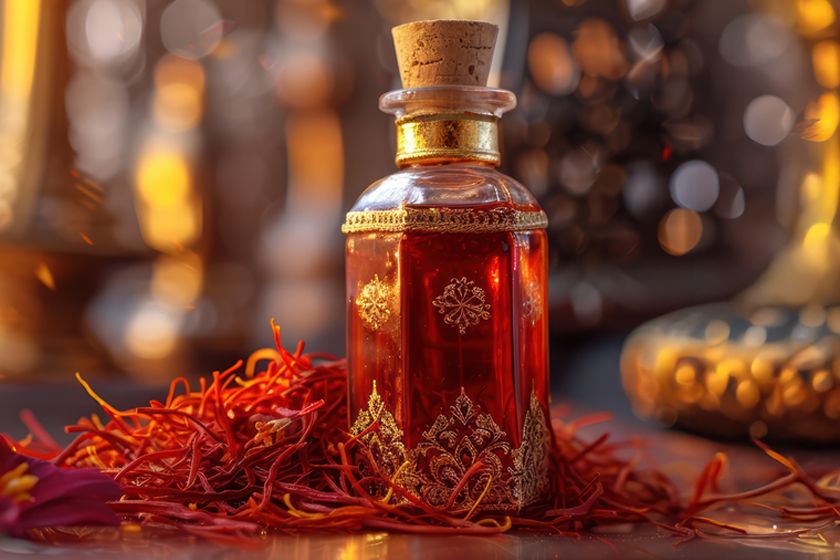
    The classical formulation of Kumkumadi Tailam finds its roots in Ayurvedic texts – Bhaishajya Ratnavali and yoga Ratanakar. The traditional recipe highlights the star ingredient Kumkum (saffron) and the richness of all other authentic Kumkumadi Tailam Ingredients, crafted through a meticulous 3-part process:

    1. Kashaya (Herbal Decoction)

    A slow-brewed decoction made from herbs such as:

    · Manjistha – Detoxifies blood and reduces uneven pigmentation

    · Lodhra – Tightens skin and refines texture

    · Padmaka – Enhances natural complexion

    · Indian Lotus – Hydrates, cools, and supports luminosity

    2. Kalka (Herbal Paste)

    A finely ground paste of ingredients like:

    · Saffron (Kumkum) – The hero ingredient that gives the oil its name

    · Sandalwood – Cooling and anti-inflammatory

    · Turmeric – Revitalizing and brightening

    3. Sneha (Base Oil + Milk)

    A traditional combination used for centuries:

    · Sesame Oil – The most penetrative Ayurvedic oil

    · Goat’s Milk – Hydrating and complexion-enhancing

    These components simmer together for hours until the herbs fully infuse, making classical Kumkumadi Tailam deeply potent, luxurious, and true to its heritage.

    The allure of this ancient formula lies in its artisanal creation. Every ingredient is added with purpose and infused slowly with patience and deep Ayurvedic understanding.

    Why Kumkumadi Tailam Is Known as an Elixir

    Kumkumadi Tailam

    In Ayurveda, an elixir replenishes, restores, and awakens the skin. Kumkumadi Tailam Benefits extend across multiple layers of the skin:

    · Supports natural radiance

    · Reduces dullness and uneven tone

    · Softens fine lines

    · Minimizes pigmentation and marks

    · Nourishes the skin barrier

    A Ritual of Glow: How the Oil Interacts with Your Skin

    Kumkumadi Tailam

    Imagine ending your day with a warm, fragrant oil that melts into your skin. With every gentle stroke, Kumkumadi Tailam invites your senses into stillness.

    As the oil sinks in:

    · Dryness fades

    · The skin feels supple

    · The complexion looks even

    · A luminous glow emerges

    Over time, the results deepen, making Kumkumadi Tailam Uses widely celebrated even today.

    A Night-time Ritual Worth Indulging in with forest Essentials Kumkumadi Cream.

    At the heart of Forest Essentials Kumkumadi Night Cream lies Kumkumadi Tailam, crafted from over 10 precious herbs. By infusing this oil into a rich, nourishing base, this Cream allows you to experience the benefits of the tailam in a comforting and easy-to-apply form.

    How to use : At night, After cleansing, warm a small amount of the cream between your fingertips and gently massage it onto your face and neck in upward strokes. Its indulgent texture melts into the skin, forming a protective veil that replenishes moisture and supports deep overnight repair.

    How Forest Essentials Kumkumadi Cream Stands Apart

    1. Powered by Ayurvedic actives.

    Pure Cow’s Ghee, Veg Squalene, and Ceramides strengthen the skin barrier and deliver long-lasting hydration with a velvety, soothing feel.

    2. Brightening botanicals for visible radiance

    Kashmiri Saffron and Kasturi Manjal work together to reduce pigmentation, refine clarity, and enhance natural luminosity.

    3. Infused with potent herbs and rare ingredients

    Pure Ruby gemstone paste is added to revitalize dullness for a smoother, refreshed complexion. Padmaka bark extract cools and repairs, while Sandalwood oil calms and purifies.

    4. Crafted for deep overnight renewal

    It’s a thoughtfully curated Ayurvedic formula that hydrates intensively, improves texture, and reveals a clearer, more radiant glow by morning.

    This nightly ritual wraps your senses in comfort and luxury, allowing your skin to rest, repair, and awaken visibly brighter and beautifully nourished.

    Conclusion: A Timeless Beauty Secret Reimagined

    In a world overflowing with so many choices, Kumkumadi Tailam stands apart—not as a passing trend but as a centuries-old ritual. Its significance lies in its simplicity, heritage, and ability to nourish from within.

    This elixir remains an ode to luminous, healthy, radiant skin. It reminds us that skincare is not just about appearance, it is about ritual, self-care, grounding, and reconnecting with nature’s wisdom.

    What is Kumkumadi Tailam used for?

    It is used for brightening the complexion, improving texture, reducing pigmentation, hydrating deeply, and restoring natural radiance.

    Can I use Kumkumadi Tailam every day?

    Yes, daily use is ideal according to skin type—nighttime application that delivers the best results.

    Is Kumkumadi oil good for face whitening?

    It does not “whiten” the skin; instead, it brightens, evens tone and enhances natural complexion.

    Does Kumkumadi Oil remove tan?

    Yes, its herbs help reduce pigmentation and sun-tan when used regularly.

    What is the best time to apply Kumkumadi Oil?

    Nighttime is ideal as the skin absorbs nourishment best during repair.

    References

    https://en.wikipedia.org/wiki/Kumkuma

    Written By:

    avtar

    Forest Essentials
    Luxurious Ayurveda

    India’s leading beauty brand with products offering a sensorial journey with the purest natural ingredients and traditional Ayurvedic formulations, bringing timeless beauty rituals to the forefront of your self-care routine.

    Reviewed By:

    Arjun Singh

    Arjun Singh
    Senior Ayurveda Expert

  • What Is Ama in Ayurveda? Signs You Need to Detox

    What Is Ama in Ayurveda? Signs You Need to Detox

    In Ayurveda, agni, or the ‘digestive fire,’ is fundamental to maintaining good health. Nourishing this fire through a proper diet is vital. Essentially, what and how you eat fuels your digestive fire. If you constantly feel drained, anxious, or deal with digestive issues like constipation, these could be signs of an accumulation of toxins called ‘ama’ in Ayurveda.

    Now, picture a life where you have abundant energy, no anxiety, and a smoothly functioning digestive system. It starts with understanding what causes ‘ama‘ and then working to reignite ‘agni,‘ your digestive fire.

    Understanding the Importance of Digestion

    The normal process of digestion that takes place in the body should usually look like this: All the food you eat should be fully digested. Half of it is absorbed into the body as nutrients, and the rest of it expels out of the body as waste products.

    Now, sometimes due to external negative influences (e.g., stress, strain, adverse weather, inappropriate food, and habits), not all the food you eat gets fully digested. Perhaps just one-third of the food is fully digested and absorbed as nutrients; the other two-thirds are fully digested and expelled from the body as waste products. But there still remains a third of the food which is in a half-digested condition. Because of this, it cannot be identified as either nutrients or waste products. Therefore, it is neither absorbed nor expelled. This half-digested, unmetabolized food product circulates in the body as toxins.

    Ayurveda has named this presence of toxins or undigested gunk as “Ama”. It is to be noted that Ama is actually a Sanskrit word that literally translates to ‘undigested’ or ‘uncooked’. Additionally, the first stage of any disease is also sometimes called ama in Ayurveda.

    Can Negative Emotions Lead to Indigestion?

    In Ayurveda, the focus is not just on eating healthy foods, but also on how well your body digests them. If you eat with joy and satisfaction, your digestion will be optimal. However, enjoying the food shouldn’t just mean savoring the taste, but about feeling mentally satisfied.

    The 5000-year-old science of Ayurveda says that you should avoid eating when you’re feeling all sorts of emotions like anger, greed, confusion, envy, sadness, bashfulness, anxiety, or fear. It can throw your digestion off track! This habit can lead to a build-up of toxins in your body, thus called “ama“, or simply “undigested or unripe stuff”. So, even if you’re eating healthy food in the right amount, your body might not process it properly if you’re stressed, sad, angry, or just not feeling right while eating.

    body detox in ayurveda

    Ama Disease Manifestation in the Body

    Ama in Ayurveda has been described as a toxic, heavy, sticky, or foul-smelling substance in the body. This can also be formed by bacterial invasion. Bacteria emit toxic substances into the system, which may also be compared to ama.

    The following are some examples that indicate the presence of ama in the body:

    • Eczema
    • Psoriasis
    • Cysts
    • Swellings
    • Painful or swollen joints
    • Hypercholesterolemia
    • Blocked arteries

    Indications of Toxin-Buildup in the Body

    • Heaviness or lethargy
    • Irregular appetite or reduced appetite
    • Generalized body and joint pains; this may happen the day after eating certain heavy foods, like meat, cheeses, desserts, and fried foods.
    • Skin seems dull and lusterless with blemishes, acne etc.
    • Bloated stomach, gases, flatulence
    • Metallic taste in the mouth
    • White coating on the tongue
    • Foul-smelling breath and sweat
    • Constipation, foul-smelling stools which may be sticky, heavy and sink.
    • Lack of mental clarity and energy.
    • A sense of heaviness in the abdomen, legs or body as a whole
    • Weary and unenthusiastic feeling
    • Blocked feeling anywhere in the body, including constipation, sinus congestion and difficulty in breathing
    • One wakes up tired even after a good night’s sleep

    Read more: Understand the Factors Causing Ama & How to Rekindle Your Digestive Fire

    Simple Ways to Rekindle Agni and Detoxify the Body at Home

    One of the most effective ways to eliminate toxins or ama in Ayurveda and restore balance in the body is by strengthening your digestive fire, or Agni. According to Ayurveda, a sluggish or impaired agni is the root cause of toxin accumulation and poor health. While intensive detox programs can be beneficial under supervision, you can also adopt gentle, home-based practices to support daily detoxification and improve digestion. Below are two simple yet powerful tools to begin with:

    Drink water first thing in the morning to help flush out toxins.

    In Ayurveda, Ushapana—drinking water right after waking up—can help detoxify the body, eliminate toxins, boost metabolism, alleviate constipation, and curb morning hunger. Please note that excessive water intake can increase “ama,” a toxic byproduct, which weakens the digestive fire and causes indigestion. Over time, this impaired digestion leads to poor tissue nutrition and may lead to various degenerative disorders. The essence lies in consuming water in the right manner, as both inadequate and excessive intake can disrupt well-being. Similarly, when you consume cold water or iced drinks, the “agni” or fire in your body extinguishes, leading to the production of toxins. Therefore, it is best to stick to room-temperature water!

    Read More: When And How To Drink Water As Per Ayurveda?

    Agnitundi Vati

    • This is a compound rich in aromatic and carminative herbs that helps reduce gaseousness, ease colic pain, and correct any constipation issues. It is mainly employed in traditional Ayurvedic practice to overcome the ill state of digestive functions. This formulation can help restore proper digestion by stimulating the release of digestive juices through your liver, pancreas as well as the small intestine. Additionally, it is antispasmodic, carminative, and digestive in nature.
    • Moreover, Agnitundi Vati is a reliable solution for intestinal inertia. It restores intestinal digestion by stimulating digestive Pitta and Vata. It also helps reduce colic pain caused by flatulence and constipation. Plus, it can aid in reviving normal appetite and alleviating indigestion, flatulence, or loss of appetite.

    Ingredients Used in the Formulation:

    • Haritaki (Terminalia chebula),
    • Bibhitaki (Terminalia belerica),
    • Amalaki (Emblica officinalis),
    • Marich (Piper nigrum),
    • Pippali (Piper longum),
    • Shunthi (Zingiber officinale),
    • Chitrak (Plumbago zeylanica),
    • Ajmoda (Carum roxburghianum),
    • Jeerak (Cuminum cyminum),
    • Vidang (Embelia ribes),
    • Kuchala (Strychnus nux-vomica),
    • Vatsanabh (Aconitum ferox purified),
    • Sarjakshar (Carbonate of sodii),
    • Yavakshar (Salt derived from Hordeum vulgare),
    • Lavan (Sea salt),
    • Saindhav (Rock salt),
    • Sauvarchal (Black salt).

    It should be taken only after consulting an Ayurvedic doctor.

    Ayurvedic DIY to Build Your Digestive Fire

    Trikatu is a classic Ayurvedic blend comprising three herbs: black pepper, long pepper, and ginger. This blend is known for its capacity to stimulate agni, aid in digesting ama (natural toxins), promote clear breathing, revitalize the lungs, regulate mucus production, sharpen mental clarity, and support proper metabolism. Traditionally, it is mixed with raw honey to create a paste. All you need to do is combine a small amount of ginger powder, black pepper powder, and long pepper powder with a teaspoon of honey. Take this mixture 15 minutes before your lunch and dinner. These herbs stimulate agni, functioning as appetizers and assisting in digestion. This also helps limit the buildup of toxins or ama in the body.

    Please note: Due to its heating nature, Trikatu may not be suitable for individuals with high Pitta levels or during pregnancy.