Author: Admin

  • Everything You Need to Know for 20% Off Cancer Touch Therapy™

    Everything You Need to Know for 20% Off Cancer Touch Therapy™

    Spa therapists will often turn away clients diagnosed with cancer due to a lack of training and insurance, but this could be remedied by Made for Life Organics’ Cancer Touch Therapy™. This certification enables spas to safely open their doors to those suffering from cancer. We have therefore partnered with Made for Life Organics to provide 20% off this course, so here are all the details…


    Cancer Touch Therapy™ has professional certification

    The course has been accredited by the Complementary Medical Association (CMA), who aims to promote ethical, responsible, professional complementary medicine and practices worldwide.

    In addition, the training has been certified by the Standards Authority for Touch in Cancer Care (SATCC), who are a highly credible governing body that supports the needs of those diagnosed with cancer. The latter of these bodies also provides a register of approved training courses for Cancer Touch Therapies, including Made for Life Organics’ own, via ThinkTree.

    Finally, The British Association of Beauty Therapy & Cosmetology (BABTAC) and the Confederation of International Beauty Therapy & Cosmetology (CIBTAC) have also approved the course.


    The course is modular and delivered online

    The training in Cancer Touch Therapy™ is delivered online through 12 hours of live Zoom sessions, or on-site upon request. This is alongside a treatment demonstration video.

    Therapists taking the course will undergo six theory modules, covering theoretical knowledge. This theory includes the five main categories of cancer, the cause and risk of Lymphoedema, and why organic skincare treatments are helpful to spa clients with cancer. Practical skills such as carrying out adaptations of treatments for the client’s comfort and safety will also be applied, as well as case study examples. Full insurance is provided for all training.


    Purchase Core by Premier Software® for 20% off Cancer Touch Therapy

    Core by Premier Software® is our award-winning spa, wellness and leisure management solution. If your business requires booking management, access to a comprehensive range of reports, staff Repetitive Strain Injury (RSI) indicators, client record types such as tagging those with cancer, automated marketing of your new Cancer Touch Therapy™ certified treatments and plenty more, then Core can help. Simply contact our team at the bottom of our Made for Life Organics partner page to claim 20% off your Cancer Touch Therapy™ training alongside your purchase of Core.


    Those with Core already are entitled to 20% off the course

    If you already have Core, then you are still eligible for 20% off training in Cancer Touch Therapy™. Click the button at the bottom of this article to read more on what is involved in the course, and you will be able to claim your discount at the bottom of the page. You can also contact our team on 0345 446580.


    The offer is only valid until the end of 2023

    However, our discount is only valid until the end of 2023. If you are thinking of acquiring Core for your business and opening your doors to those diagnosed with cancer, then please contact us below and our team will be happy to help. Make sure you understand what you need to know to treat spa clients with cancer, and claim 20% off Cancer Touch Therapy™ before it’s too late!


    CLAIM 20% OFF CANCER TOUCH THERAPY

  • Seven Proven Ways to Motivate Your Team in the Spa

    Seven Proven Ways to Motivate Your Team in the Spa

    If team morale is low, then so is their drive, which is why it is vital to motivate your team in the spa. Whilst you may have hired enthusiastic spa therapists with strong skills and experience, they may feel disenchanted after several years of the same work. Therefore, we have put together seven proven ways to energise your spa team and help bring their A-game to their day-to-day.


    1: Motivate your team in the spa by creating an open working environment

    An ‘open working environment’ encourages open communication across your teams and management, creating an inclusive atmosphere. In the spa, this enables the team to provide their opinion and feedback to enable the business to grow where needed. The best way to do this is to remove barriers in conversation, such as locking yourself away in a separate office for hours on end, or by not having some sort of internal, digital messaging system. Whatever you implement, it’s important you make it easy for both introverted and extroverted staff to have their say.


    2: Take the time to listen to your team

    An open environment is pointless unless you take time to listen to your team. Schedule some time in your staff’s diary and your own where you can discuss their thoughts more in-depth. Perhaps they have a great idea to enhance time efficiency, or how to upsell spa products such as our advice on maximising every opportunity to upsell? You will never know unless you take the time to speak with them in the first place!


    3: Provide opportunities to learn

    Each member of the team will be motivated by something personal. Frequent reviews can help you find out what these are, as well as how you can help cater to them. They may wish to someday become a senior spa host or therapist, requiring additional training to do so. You could support them in this dream, providing them targets for personal development, or by providing opportunities to learn via types of Continuing Professional Development. This will help motivate your team in the spa by helping them feel supported, and that they are working towards something.


    4: Share company updates and information

    Your team have shared their side of things, but it is just as important to share your side such as via company updates. For example, perhaps you plan on doing something special for the anniversary of the spa? Sharing this information will involve them in the process, helping to motivate your team in the spa. The same goes for details regarding company profits or, should it ever happen, the company is due to be acquired by another. Being transparent goes a long way in making your team feel valued and understand how they fit into the bigger picture.


    5: Motivate your team in the spa with individual records

    There are few things worse than feeling like just another cog in the machine. However, measures can be taken against this by giving each member of staff a record card. It may sound like a simple resolution, but it is a solid foundation for recording personal details, performance and overall making them feel like an individual. When properly set up, these can then be assigned when booking treatments and help staff feel like they’re taking ownership of everything they do.


    6: Provide incentives to motivate your team in the spa

    Hard work should be rewarded. Outside of each individual’s long-term goal, incentives for working towards targets or business goals will help motivate your team in the spa. For example, providing commission on selling products will help motivate staff to upsell where possible. Even if you don’t have a high budget, you could implement several low-cost ways to reward staff in the business.


    7: Thank every member of staff for a job well done

    Speaking of recognising staff performance, ensure you congratulate them when they do achieve something worth highlighting. It could be outside of the ordinary, such as handling an unexpected and difficult client complaint, or stepping up to cover another member of the team, short-notice. Whatever the case, remember to celebrate their success and this will help with staff retention measures to help retain the right team. This, in turn, will help motivate your team in the spa to keep aiming high.


    Premier Software (historically Core by Premier Software®) can help motivate your team in the spa with an unrivalled selection of features. Whether you want to schedule time with your team, set up staff records, provide commission, recommend products with treatments or more, Premier Software has all you need. For more on how Premier Software can help you, click the button below.


    BOOK A FREE PRESENTATION

  • The Dangers of Overpromising and How to Avoid Them

    The Dangers of Overpromising and How to Avoid Them

    When marketing your spa offerings, it can be easy to create high expectations on the back of overpromising. Whilst it is wise to highlight your unique selling points to attract clients, overpromising but underdelivering can have the opposite effect. To avoid such a scenario, we have outlined five areas where you can curb overpromises and why it’s best to deliver exactly what you offer.


    Overpromising in your marketing messages

    It isn’t uncommon to see marketing that showcases a representation of what’s being offered. However, it is crucial that your messaging is clear in what you’re offering for prices, treatments, products and more. This is particularly important in the UK, where The Consumer Protection from Unfair Trading Regulations outline that businesses cannot include deceptive messages or leave out important information to clients and customers. Failure to do this could result in a hefty fine.


    Overpromising using marketing imagery

    Imagery is perhaps the easiest place to create a false impression through overpromising. Botox, for example, is a particularly popular treatment that many images falsify the results of. This creates a level of disappointment for many clients, which could be remedied through an image of the actual results. A realistic, but still positive, image in your email marketing creates an expectation that can be met by your team.


    Focus on the benefits, not false possibilities

    As a society, we often favour potential and possibility over the benefits of the here and now. Similarly, your spa marketing should sing the praises of your unique selling points in a realistic light. Do you have unique facilities such as an immersive natural environment or hydrotherapy pool? If so, outline the benefits in your marketing such as the environment helping to calm the mind or the pool jets helping to ease muscle tension, rather than they absolutely will or potential benefits.


    Overpromising skincare results

    It can be easy to overpromise the effects of a skincare treatment on social media, especially when it isn’t clear that the results are often from an extended period of treatments. Due to this, many clients feel misled when the results aren’t immediate. It’s therefore important to make this clear in your marketing, as well as from staff on-site. Taking picture records after each treatment may and attaching them to each client record can also help in the long-term, providing a timeline of treatment results.


    Clarity over natural products

    Do you know the difference between natural and organic products? Many individuals don’t, which is why it is vital to communicate the right details in your treatment menu and products so that clients understand what they’re getting.

    A natural product is one that uses a high volume of natural ingredients, such as from plants, animals or minerals. Organic products are those that use ingredients from organic farming – that means no pesticides or artificial fertilisers. This can go a stage further with vegan products, which don’t contain animal produce. Make sure this is communicated clearly to clients and make sure you’re not overpromising results or providing the wrong type of product, especially when organic skincare treatments are helpful to spa clients with cancer, specifically.


    Overpromising is a result of wanting what’s best for clients, but can backfire in ways that can break client trust and create poor reputation for your business. (Core by) Premier Software can help manage the right message through email marketing, setting your spa treatments, packages, offers, managing client expectations and more. To discover Premier Software, book a free presentation below.


    BOOK A FREE PRESENTATION

  • Journey Hospitality scores a hole in one with addition of Mal Rennie

    Journey Hospitality scores a hole in one with addition of Mal Rennie

    Golf technology expert joins Journey to develop its Golf Management solution for luxury hotels and resorts


    Cheltenham, UK – 20th July 2023Hotel ecommerce company Journey Hospitality has appointed Mal Rennie to the new role of Director of Golf.

    Rennie has over two decades of experience working with golf technology companies, as Sales Director at Golfbookings.com to General Manager, later Managing Director and Chairman of its parent company, Concept Software Systems. 

    In his new role as Director of Golf at Journey, Rennie will lead the company’s strategy and vision for the Golf Management platform which is is already in use at leading luxury resorts including Bovey Castle (Devon), Tewkesbury Park (Gloucestershire), Rockliffe Hall (Durham), and Goodwood Hotel (West Sussex).

    Rennie said: “Golf is not just my business, it’s my passion. I’ve worked – and played – in this space long enough to know that technology is increasingly vital in delivering a great golfing and hospitality experience. It’s not just about providing a great tee-sheet with retail and membership functionality; the wants and needs of resort properties have evolved and  Journey’s portfolio of products and services fully complement and enhance this. I’m looking forward to introducing the Journey platform to the market and the positive impact we’ll make to both guests and owners alike – exciting times!” 

    Simon Bullingham, CEO and Founder of Journey Hospitality, said: “Mal’s expertise is a perfect fit with our wish to provide the leading end-to-end experience management solution for hotels and resorts. Working with our onejourney® ecommerce platform to drive direct bookings, the spa and golf solutions enhance a guest’s digital journey. Mal’s experience will be invaluable as we scale our offering across the UK and beyond.”

    Away from the office, Rennie can – unsurprisingly – be found on a golf course.


    DISCOVER MORE ABOUT JOURNEY HOSPITALITY


    About Journey Hospitality

    Journey Hospitality is a hotel technology business revolutionising ecommerce for the hospitality industry maximising online experiences to drive commercial success.

    Its portfolio includes: onejourney® – the world’s first all-in-one hotel ecommerce platform enabling guests to customise their stay by booking rooms, spa, dining and retail products in a single shopping basket; Premier Software – the UK’s top spa and leisure management software; Gifted – the UK’s market leading hotel gift voucher platform; Journey Agency working with luxury hotel partners for web development and digital marketing, and Journey Consultancy, designing bespoke transformational strategies in technology and commercial frameworks for hospitality businesses.

    Established in 2010, the Cheltenham-based business has a team of over 120 industry experts at the forefront of hotel ecommerce innovation. A Certified Google Partner, Journey works with over 650 luxury hotel partners around the world including Claridge’s, Beaverbrook, Calcot Collection, The Londoner, Soneva (Maldives) and Grantley Hall.

    The company won the ‘Innovation in Tech’ award at the Business Awards – Travel 2023 and ‘Best Website’ (for The Elms) at the Hotel Marketing Awards 2023. Journey is also shortlisted for the Best Hotel Booking Solutions Provider at the 2023 World Travel Tech Awards for its onejourney® platform.

  • What Matters Most to Spa Clients in 2023?

    What Matters Most to Spa Clients in 2023?

    The Good Spa Guide has revealed its State of the Spa Report 2023 and what matters most to spa clients. The survey (titled ‘Do Sustainability and Wellness Matter’) results break down what is most popular, changes to recent trends, and plenty more. To ensure you maximise your offerings to the current spa market, we have outlined several key stats and how you can utilise them effectively.


    58% considered thermal rooms most important for a spa day

    One of the most surprising stats is that only 13% of survey respondents considered the right treatment as most important. That reveals many spa clients are making bookings for other reasons; what matters most is booking a thermal room with a spa day, with 58% wanting this most of all. Should you have thermal rooms and facilities, now is the time to market these, otherwise perhaps it’s time to incorporate alternative treatments to expand your client base.


    53% of spa clients consider wellness options when booking

    47% of survey answers don’t consider wellness offerings when booking treatments, which means just over half do. With this in mind, it’s worth catering to the 53% of wellness enthusiasts with trending spa and wellness treatments you could implement. Whether it’s incorporating meditation and sound bathing classes, or simply utilising salt saunas, there are plenty of wellness treatments you could be using.


    42% of respondents considered sustainability a factor when booking

    Sustainability has been what matters most to spa clients in recent years, with many seeking how to make create a more sustainable business. However, of the 42% of survey respondents considering sustainability when booking, only 5% of them actually booked sustainable options. That signifies sustainability is, perhaps, not at the top of client interests at current, although could make a resurgence in the near future. To help prepare, we have further advice on making a more sustainable spa.


    9% were worried about visiting a spa due to pregnancy, disability, cancer or gender

    We understand that many have body-based concerns that deter them from visiting a spa. Nevertheless, you can offer treatments that cater exclusively to those that are pregnant, non-binary or diagnosed with cancer. With Made For Life Organic’s certification in Cancer Touch Therapy™, spa therapists can provide cancer-safe treatments and help open your doors to affected clients. This also extends to creating an inclusive environment to make a disabled-friendly and accessible spa, or by  making your spa more gender inclusive (although 59% of survey respondents wanted traditional changing rooms).


    68% of spa clients expect to pay the same or more than before

    Two-thirds of spa clients stated they expect to pay the same or more in the current economic climate. That relieving statistic means you won’t necessarily need to cut your pricing or create offers just to attract new and existing clientele. In fact, it means you will be able to still upsell and boost additional revenue without the worry of deterring spa clients.


    Premier Software (previously Core by Premier Software®) can set up new treatments, spa packages, amend pricing and market all your new offerings with ease. When combined with onejourney®, you take the effort out of upselling complementary items and package upgrades at the point of sale, boosting your revenue. To find out more about Premier Software, book a free demo below.


    BOOK A DEMO

  • Spa economics: Turning relaxation into revenue

    Spa economics: Turning relaxation into revenue

    How improving the understanding of a spa’s commercial benefits shifts hoteliers’ thinking about the wellness sector.

    It wasn’t too long ago that some hoteliers would openly treat spa managers and therapists as a ‘nice to have’, with some general managers even known to refer to spa therapists as “beauty dollies”. Thankfully, times have changed: led by improved social equalities and a heightened appreciation of the commercial value a spa can bring to a hotel. 

    In the UK, the wellness market is estimated to hit £30.6 billion in 2023, but it’s not just financially savvy for hotels to create a memorable spa experience – it’s also vital in meeting today’s guests’ expectations. There’s no doubt spa is a lucrative business – wellness travellers spend 53% more than typical tourists, and it’s believed hotels which don’t invest in this area may risk alienating future investors. 


    What consumers want

    A report by Mindbody and Classpass found, despite the squeeze on disposable incomes, people will continue to spend on wellness, considering it an essential area of their lives. 

    Hilton found 50% of travellers like to address their physical or mental wellbeing when travelling, and increasingly, hotel guests expect a wide array of leisure facilities and activities when they book a room, even if only visiting for one night. 

    Paired with Barclay’s Wellness Imperative report, which found almost a third of UK adults expect health and wellness offerings to be included as standard by hotels, it’s clear that wellness is closely woven into people’s lives.  


    Understanding the business of spa

    Within a hotel, profit margins vary greatly across different departments. Rooms dominate revenue planning thanks to an average profit margin of around 75%. But spa, with a typical range between 15% to 25%, is rapidly catching other areas such as F&B (around 25%) and becoming increasingly profitable with a new breed of spa professionals, armed with products and services to help their business. 

    Creating a commercial culture within a spa is key in positioning wellness as an important revenue stream as part of the wider hotel team. 

    To do this, spa leaders need to be results focused, have a deep understanding of their P&L and strategically plan how to grow their business. They need to create ways to optimise their profit and enhance the overall guest experience, to encourage word-of-mouth referrals and repeat business – each providing a lower customer acquisition cost than other marketing methods. 


    Improving your commercial understanding

    Key steps to consider as you improve the commercial standing of your spa within your hotel include: 

      • Understand your customers – what treatments do they book and when? Are there opportunities to grow your spa users from in-house guests or members, or should you focus on the local market? What can you do to improve product sales? 
      • Use the data you have – understand your sales figures and identify seasonal trends as well as any regular quiet periods. Use reports to see how and where the business is performing well, and build an action plan to grow your business.
      • Think in numbers – wellness may be rejuvenating for guests, but nothing will revitalise senior hotel stakeholders more than the financials. Just like other revenue generating departments, set clear budget goals that are measurable, and report back using metrics that align with your hotel’s wider commercial strategy such as revenue per treatment room (RevPAT), per square foot, per guest, or payroll as a percentage of revenue. 


    Strategic spa management

    Leading strategists such as Sonal Uberoi – who empowers spa managers to commercialise their offering with her ESSENCE model – encourage the positioning of wellness as an asset to hotels. Today’s guests want transformative experiences, and hoteliers can cater for that by focusing on the holistic guest experience. 

    Spa managers are also aided in becoming more strategic by spa management technology, further driving wellness towards being viewed as a serious business function. At Premier, we provide a comprehensive reporting functionality to our users, helping spa managers engineer their understanding of items such as the most profitable treatments, top sellers, and the most utilised therapists. 

    As a stand alone spa management platform, Premier helps spa managers grow commercially; grouped with our sister ecommerce platform onejourney, spas and hotels receive a full ecommerce solution to enhance their guests’ booking journey. 

    Read more about how ecommerce is helping hotel and resort spas 

  • Premier Software announces the passing of founder, Chris Mallen

    Premier Software announces the passing of founder, Chris Mallen

    Our much loved and respected founder of Premier Software, Chris Mallen sadly passed away last week.

    Chris was one of the co-founders of Cannock based Premier Software in 1994, which was recently acquired by Journey Hospitality in 2023.

    With Chris at the helm, Premier went from strength to strength providing award winning software to some of the UK’s most prestigious spas, including partnerships with Harrods, The Belfry, Macdonald Hotels, Espa Life and The Corinthia, and many more…


    Premier Software: Pioneers in salon software

    Starting a small software business in Cannock, Staffordshire, Chris launched the industry’s first salon & day spa management software.

    Chris was a hands-on director and would often be seen alongside the team at trade shows and industry events. He loved to travel and enjoyed training new clients in getting the most from their software solutions.


    A well respected and steadfast industry supplier

    Chris always listened to feedback from people out in the spa industry.

    He pushed the boundaries of software development and launched a company that would stand the test of time. Premier will be celebrating 30 years next summer.

    As a keen runner, Chris completed many endurance runs, including the London Marathon and Great North Run to raise money to support local charities.

    Rob Whitehead, Product Specialist at Premier Software says “The sudden passing of Chris has sent shockwaves through our closeknit team. Chris was funny and kind, but also a great mentor and friend to many of us. We have been privileged to have his guidance and wisdom over the past 30 years”.

    Chris is survived by his wife Abbi and their sons Corey and Alfie. A funeral will be held on 1st November, the family have requested that any donations are made to the Midlands Air Ambulance in his memory.

  • The rise of self-service appointments

    The rise of self-service appointments

    Self-service facilities offer spas additional revenue without extra staffing costs, whilst giving guests the chance to personalise their spa visit.

    Imagine a way of reducing the physical toll on your spa therapists, boosting your spa revenue and providing your spa users with a bounty of wellness choices. Thanks to self-service facilities, this is the reality for spas across the world. 

    ‘DIY’ treatments – such as cryotherapy – have been rising in popularity over the last decade. Faced with the ongoing challenge of staff shortages and consumers who increasingly seek out wellness choices when visiting day and hotel spas, offering stand-alone, self-service styled ways for a guest to relax is the perfect solution for spas.


    Examples of self-service spa facilities

    Initial iterations of the ‘self-service’ spa concept tended to centre more around beauty than wellness treatments, with spray tanning and steam facials leading the way in the mid 2000s. 

    With a greater emphasis on holistic wellbeing, today’s facilities vary from self-applied salt scrubs in a hammam, to water-based activities including hydrotherapy and flotation tanks. But savvy spas widen their appeal to even more potential guests by extending to options beyond the indoors, with forest bathing, natural outdoor ponds and private poolside cabanas featuring as key areas which drive ancillary spend. 

    At the ISPA Conference in Las Vegas (May 2023), ISPA president Lynne McNees cited changing technology as partly responsible for the boom in self-service options: “Touchless treatments and wearable equipment show that technology is reshaping the spa experience.” 

    Technology includes massage loungers and light and sound programmes in pools or hot tubs, many of which can be installed not only in spa relaxation and treatment rooms but also in hotel bedrooms and suites, leading to upsells in rooms. As well as providing additional options for guests to tailor their spa experience, technology can help ease pressures on staffing as guests can operate the self-service areas themselves.


    Self-service in action

    As the UK’s leading spa management solution, Premier works with over 750 standalone and hotel spas around the country. We’ve witnessed first-hand self-service options transform spas, becoming integral to a spa’s design and offering, and crucially driving additional revenue. 

    At Manchester’s Lowry Hotel, their spa has recently been transformed into a flagship wellness haven of peace and serenity. The new RE:TREAT facility pairs the modern therapy preferences of Hollywood celebrities with cutting-edge scientific treatments, using technology-based equipment to offer their guests a cryotherapy chamber, meditation pod and sensory deprivation tank. 

    Other notable examples of self-service spa options, each evoking a sense of well-being and relaxation, include: 

    • The Belfry’s Fire and Ice Experience features an aroma cave, crystal steam rooms, hydrotherapy pool and ice rooms, harnessing a multi-sensory experience and bio-thermal techniques to improve guest experience.
    • The Signet Spa, part of The Retreat at Elcot Park, provides a heated outdoor infinity pool, hydrotherapy pool, Himalayan salt sauna, aroma steam room, and salt flotation pod. 


    How to manage self-service options within your spa

    Whether your spa’s wellness offering is spread across multiple floors, hectares of forest or housed in one convenient block, it’s essential that spa managers and their teams can easily understand where they need to be and where the guests are. 

    By using an advanced spa management system such as Premier, self-service spa options are able to be managed in a clear, convenient way including blocking off for maintenance or cleaning or assigning time slots to guests. Utilisation reports highlight the effectiveness of each area, from hammams to relaxing cabanas, to minimise time demands and physical workloads of staff.  

    Guests can create personalised itineraries for guests, focusing on areas of their individual wellbeing that are important to them. As people increasingly prefer to book online, pairing your management software with an intuitive ecommerce platform such as onejourney® creates a seamless digital experience for your guests. Together, the technology can turn a massage chair into an easily bookable, revenue generating space.

  • The hottest spa trends for 2024

    The hottest spa trends for 2024

    From treatments inspired by local ingredients to those which can be best described as bizarre, the hottest spa treatments for 2024 bring a fresh approach to wellness and beauty. 

    Collective wellness is one of the top trends tipped for 2024, with people seeking more ‘we time’ than ‘me time’. But alongside the consumer thirst for social wellbeing, there remains a drive for localised and unique experiences, ones that spark a lifelong memory and can be recalled to friends and family for years to come. 

    We’ve looked beyond the headline trends in wellness to identify treatments guaranteed to tick those boxes. Some will hopefully inspire creative additions to existing spa menus, while others may be ones to try on your next trip. 


    Harnessing the local environment and traditions

    Not every spa has access to stunning outdoor facilities such as hot springs or volcanos, but by using products in your treatments that are sourced from local areas or traditions, you can promote your location and provide a sense of place to your spa guests. 

    Vanagupe spa in Lithuania offers an amber spa ritual, highlighting the Baltic legend of a mermaid queen who had her amber palace destroyed, while the Apuane Spa at Four Seasons Punta Mita in Mexico uses the nopal cactus plant in a massage, removing the plant’s spikes to form a paddle to relax muscles and ease sunburn. 

    If you don’t have a local natural ingredient to draw on, consider local traditions to create a unique and memorable spa experience. A knife massage using meat cleavers in Taiwan; golf ball massage at Dromoland Castle in Ireland; or drums and chanting in a VooDoo ritual in New Orleans – each plays on popular local activities of the past and present.


    Find your grounding through sound

    Referred to as ‘sound baths’, this is actually a clothes-on, dry experience where different frequencies created by gongs, crystals, Tibetan bowls and even synthesisers stimulate your brainwaves to lead you into total relaxation and boost your nervous system. Used by hotel spas such as The Mandrake (London) and Mandarin Oriental Hyde Park (London), it is thought to improve your mood, reduce stress and induce better sleep.  


    A culinary experience

    Spas are increasingly taking the ‘menu’ part of their treatment list literally, with food and drink inspired treatments appealing to guests. This is also a great opportunity to tap into local flavours, promoting a sense of connection with your local community and national heritage. Our favourites include:

    • Beer Spa in Czechia – immerse yourself in a wooden hot tub loaded with malts and hops, as you imbibe local brews
    • Sake bathing in Japan – believed to prevent age spots from forming, some hotels provide a bottle of sake to add to your bedroom’s bath tub
    • Port-infused vinotherapie spa in Portugal – a wine barrel soak in warm water and concentrated red wine extract to condition your skin
    • Hershey’s chocolate treatments in USA – In Pennsylvania, home to the well-known chocolate brand, try a Chocolate dipped strawberry infusion signature treatment – a strawberry parfait scrub with a cocoa butter and chocolate hydrating body wrap. 


    Fortune favours the brave

    For guests seeking to smooth out wrinkles, tackle signs of ageing, or refresh their body, there’s a world of wacky choices available. Snail facials are popular in Japan (apparently, the slimy trail contains moisturising properties); Bee venom is also used in facials to heal acne and reduce wrinkles; the Nightingale or Geisha facial – inspired by Japanese geishas – includes bird poo, with treatments available at London’s Hilton Park Lane; relax to the rhythmic movements of a snake massage (just don’t scream or scare your reptilian therapists as they work your back, neck and scalp), and leech detoxification is used to treat arthritis as well as refresh tired skin (originating in ancient Egypt, a leech’s saliva is thought to contain anaesthetic and anti-clotting properties). 

    Claiming a more medically researched approach, the scarily named Dracula Therapy (drawing your blood, separating your platelets in a centrifuge, before injecting your blood back into your face; also known as a Vampire or PRP facial) and Blood Type therapies (popular in Thailand, tailoring the products, massage technique and room temperature based on your blood type) work to slow and reverse the ageing process. 

    Vitamin drips are also growing in popularity, particularly in party destinations such as Las Vegas as they are easy to administer, don’t require much space, and offer a quick refresh for those spending late nights in the clubs or simply jet lagged. 


    Hot and cold

    Fire walking once formed the basis of many retreats, but today’s fire therapy looks different than walking over hot coals. Based on Chinese therapy, treatments involve a herbal paste being applied to your body, before a wet towel soaked in alcohol is laid on your skin and set on fire. It’s thought to stimulate your acupuncture points and can aid recovering from lumbar disc hernia or joint sprains. 

    If that seems too hot to handle, cryotherapy is the other extreme. Scandinavia is the ideal destination for these short, sharp bursts of freezing, with treatment temperatures as low as -120 degrees celsius. Finland’s Haikko Spa offers up to three-minutes in the chill chamber to aid pain relief and create glowing skin. Cryotherapy pods are also found on high street areas around the UK, helping treat injuries and addressing general fatigue and sleep issues. 

    Appealing to spa guests seeking a memorable experience that also delivers relaxation and rejuvenation doesn’t need to involve costly refurbishments or extension of your facilities. Identifying products that can be used in small spaces or crafted into a local-flavoured treatment is an ideal way to tailor to guest demand in 2024 and beyond.

  • Lead the way in cosmetics sustainability – Arbelle

    Lead the way in cosmetics sustainability – Arbelle

    Beauty brands often market themselves as clean, but they have a dirty secret. They produce over 120 billion units of packaging annually, or 15 pieces of cosmetic waste for every person on Earth. This leads to the loss of 18 million acres of forest each year, an area almost as large as Ireland. 

    And packaging is only part of the problem. From the sourcing of raw materials to the disposal of products, every stage of a cosmetic’s lifecycle leaves a mark on our planet

    The good news? Many brands, big and small, are stepping up. Giants like L’Oréal and Garnier are leading the charge with ambitious sustainability goals. This isn’t happening by accident — it’s a response driven by consumers who demand more from the brands they love.

    In fact, 60% of consumers are willing to change their shopping habits to reduce their environmental impact and a whopping 80% say cosmetics sustainability is important to them. ( POSITIVE+)

    This is part of broader trends in the makeup industry that include thrifting, veganism, cruelty-free products, and a growing rejection of fast fashion. People are waking up to the impact their choices have on the planet, and they’re voting with their wallets.

    As a beauty brand, you’re now in a position to lead by example. You’re no longer selling a product, you’re selling a purpose. It’s becoming clear that sustainable beauty is no longer optional, it’s a key driver of loyalty and success.

    Key takeaways:

    • The beauty industry generates 120B+ packaging waste yearly, driving deforestation.
    • Consumers demand change – 60% prioritize sustainability, 80% value eco-conscious beauty.
    • Brands are rethinking sourcing – using ethical ingredients, reducing water waste, and cutting carbon footprints with local suppliers and eco-friendly transport.
    • Beauty AR tech cuts waste by replacing testers, reducing returns, and enabling smarter shopping.
    • Virtual try-ons boost sales – Sephora saw a 35% conversion increase.
    • Sustainable beauty isn’t optional – it’s a key to brand loyalty and success.

    Manufacturing: Starting at the source

    It all begins with what goes into your products. Sustainable ingredients are those that are ethically sourced, have a minimal environmental impact, and support biodiversity. 

    For example, Garnier uses naturally sourced ingredients such as South African bee wax, Hungarian acacia honey, and Aloe vera from Mexico. This year, they’ve pledged to support 800 communities worldwide through fair trade practices.

    cosmetics sustainability_Arbelle

    Water, a precious resource we often take for granted, is heavily used to produce makeup. L’Oréal is implementing waterloop factories that recycle water internally and aims to substitute all conventional plants until 2030.

    Distribution

    The distribution phase is where many brands overlook cosmetics sustainability. Each step of the transportation chain, from raw material to the final product on the shelves, adds to the carbon footprint.

    Companies have started sourcing ingredients locally and are turning to lower-emission transport and reducing package weight.

    The consumer use phase

    Changing the way consumers use and dispose of products is key to driving sustainable beauty.

    Encouraging responsible usage through refillable containers, or using biodegradable packaging, can make a significant difference. Companies like Lush and Fenty Beauty are leading the pack with refillable products and recyclable components, reducing waste at the post-use phase.

    Consumers are thrilled about this. One of them said:

    “I love the idea of bringing back old and empty containers to be recycled and used again. I love refills, especially for eyeshadows, and putting them in a bigger, empty cardboard magnetic palette. Much less waste.”

    ➥ Quality over quantity 

    Once the product reaches the consumer, the focus shifts to usability and longevity

    High-quality products that last longer are more sustainable than cheap, short-lived alternatives. 

    Another consumer jokes: 

    “I’ve been married almost 16 years and I definitely still have at least one eye shadow palette that I bought at the airport going on my honeymoon. As long as they aren’t funky, I’m not going to ditch them when they’re still usable.”

    How beauty AR drives cosmetics sustainability

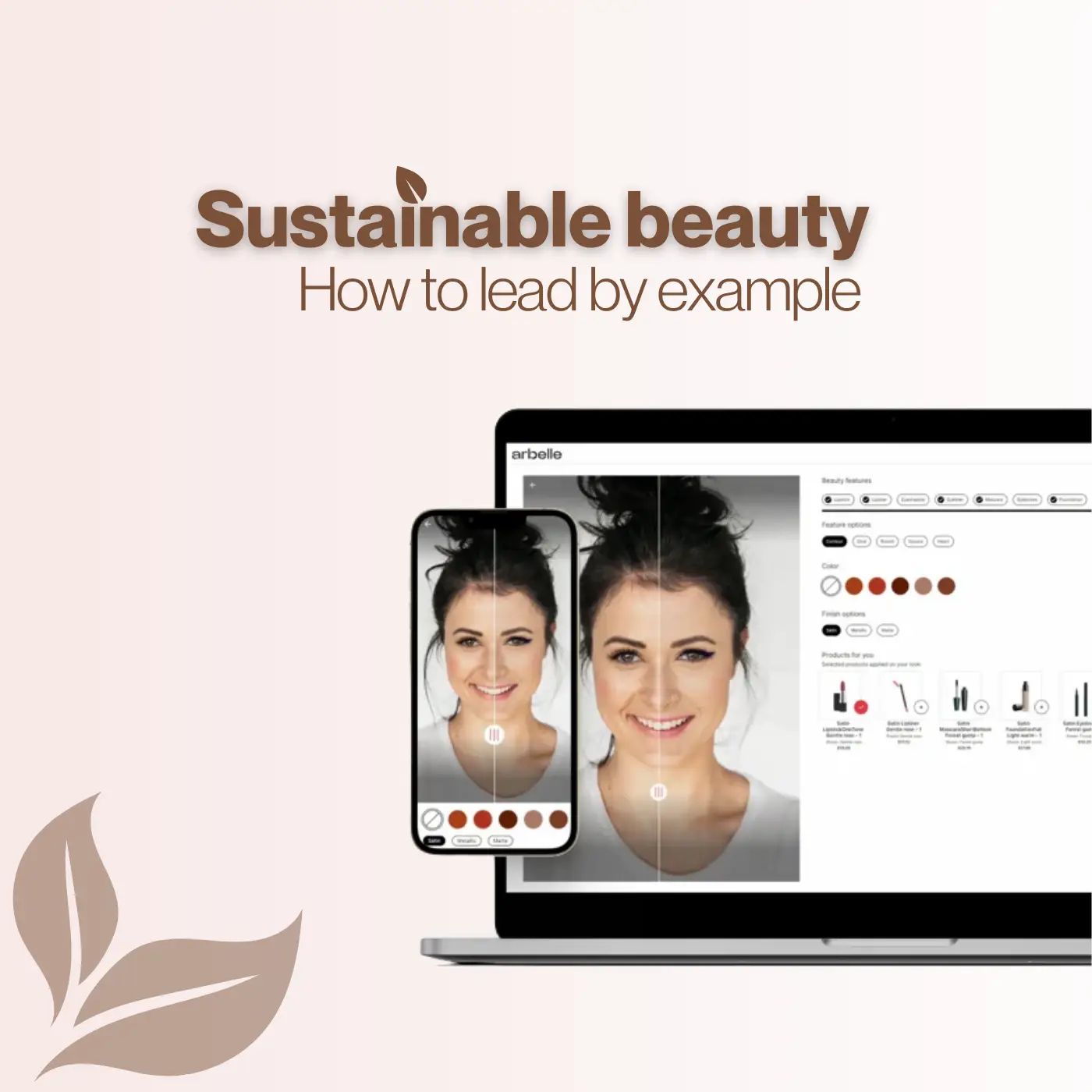
    All those testers at stores that get tossed after one use add up to a lot of waste. Here’s where beauty tech steps into the picture. With virtual try-ons, consumers can test 50 shades of lipstick without messy swatches and tiny plastic tubes heading straight to the landfill.

    And it’s not just testers. Think about all the packaging for samples and promo products — plastic, paper, more plastic. Instead of handing out physical freebies, you can let consumers “try” products digitally. No wrapping, no shipping, no guilt. Plus, fewer returns because with AR, what you see is (way closer to) what you get.

    ➥ Beauty AR in the real world

    Virtual try-ons can lead to a 2.4x increase in purchase likelihood. Sephora has seen a 35% increase in conversions after adopting virtual try-ons. Ulta has implemented it on their mobile and web app, letting users try on foundation, lipstick, hair colors, and even fake lashes. 

    No more double-dipping into communal testers (gross) or ending up with unused products. It’s a win-win: consumers get their perfect product, and the planet gets fewer tossed-out products. 

    ➥ Personalized products = less waste

    AR isn’t just fun. It’s informative. You can use data from virtual try-ons to figure out what consumers actually like and personalize their shopping experience. That means fewer “meh” products sitting unused in drawers and less overproduction of stuff nobody buys.

    At Arbelle, we’re proud that our cutting-edge makeup AR is already making beauty shopping way greener.

    clean-beauty-and-sustainability_Arbelle

    Final thoughts

    So there you have it: the beauty industry’s dirty secret is starting to get cleaned up. 

    You’re now in a position to not only meet the growing demand for sustainable beauty but to be part of the solution. 

    Consumers are ready to support brands that prioritize the planet. And with tools like AR and smarter manufacturing, you can play a major role in creating a greener, more responsible industry.

    Discover our beauty AR tools

    How can our beauty AR solutions boost your business and suistainability practices? Contact us and we’ll tell you all about it.